Guide
How cold-chain shipping protects medications
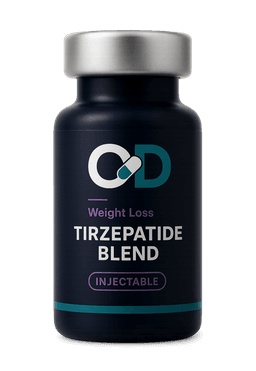 Discussed in this guideTirzepatide Blendfrom $138.29
A plain-language look at why some molecules are sensitive to heat and how temperature-controlled shipping is designed to keep them structurally intact from pharmacy to doorstep.
On this page
Why temperature matters for some medications
When a package of medication travels from a pharmacy to your door, it may pass through warehouses, delivery trucks, and doorsteps where the temperature is far from controlled. Most everyday tablets tolerate this without trouble. Certain other medications, however, are chemically sensitive to heat, and the way they are shipped is designed around that sensitivity.
This article explains why some molecules — particularly peptides — are vulnerable to temperature, what physically happens to a molecule exposed to heat, and what "cold-chain" shipping means. It is educational only and does not describe how any medication should be used or what it does for a person; those judgments belong to a licensed provider and pharmacist.
What makes peptides heat-sensitive
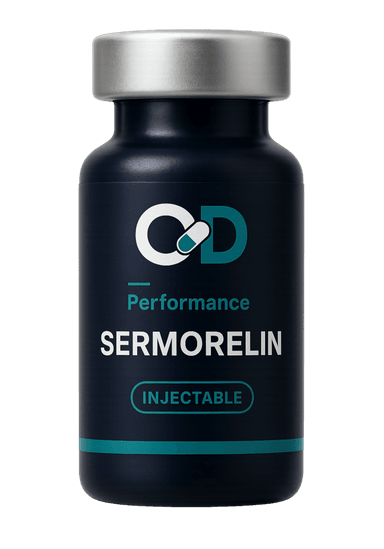
A peptide is a short chain of amino acids — the same building blocks that make up proteins — linked together and folded into a specific three-dimensional shape. In biology, that folded shape is closely tied to how a molecule is understood to interact with the receptors and enzymes it is designed to bind. Peptide medications such as tirzepatide-blend and sermorelin are examples of this class of molecule.
Because a peptide's identity is bound up in its folded structure and the sequence of bonds holding it together, it is generally more delicate than a small, rigid chemical compound like the active ingredient in a common painkiller. Conditions that would not affect a sturdy small-molecule tablet — warmth, agitation, or long periods in transit — can matter more for a folded peptide. This is a property of the chemistry, not a claim about what any particular product does.
How heat and time can alter a molecule
Heat is a form of energy. When a temperature-sensitive molecule is held above its intended range, that added energy can disturb the weak forces that hold its three-dimensional shape in place — a process broadly described as denaturation, in which a folded molecule loses its original conformation.
Elevated temperature can also speed up chemical reactions that break a molecule apart. Hydrolysis, for instance, is the splitting of chemical bonds by water, and it is understood to proceed faster when it is warm. Some peptides can also aggregate, meaning individual molecules clump together rather than staying evenly dispersed. Each of these processes is thought to change the molecule from the form the prescription intended. For some products, freezing is a concern as well, because ice formation can stress a formulation just as heat can.
This is why manufacturers and compounding pharmacies establish validated temperature ranges based on stability data. The range is not arbitrary; it reflects the conditions under which the molecule is expected to remain structurally intact for a defined period.
What cold-chain shipping means
Cold-chain shipping is the practice of keeping a temperature-sensitive product within its validated range at every step between the pharmacy and your hands — an unbroken "chain" of controlled temperature. If any single link is broken for too long, the value of the others can be lost, which is why the whole sequence is treated as one system rather than a set of separate steps.
- Insulated packaging that slows the transfer of outside heat into the parcel
- Coolants such as gel packs or phase-change materials sized to the expected transit time
- Expedited shipping so the parcel spends less time in uncontrolled environments
- Temperature indicators that record whether the shipment stayed within its intended range
The goal of each element is the same: to preserve the molecule's structure in transit so that what leaves the pharmacy is the same as what arrives. None of this changes what a medication does — it is about maintaining the physical integrity of the product during shipping.
Handling a temperature-controlled package after it arrives
When a temperature-controlled package reaches you, the label and the pharmacy's instructions describe how it should be stored — for example, whether it belongs in a refrigerator or at room temperature. Storage requirements differ from one formulation to the next, so the guidance that comes with your specific medication is the authority, not a general rule of thumb.
How it works on OpenDoseRx
On OpenDoseRx, a licensed clinician — not the shopper — makes the medical decision. You choose a product and strength, then complete a medical intake with your health history. An independent, licensed U.S. provider reviews that intake and decides whether a prescription is appropriate for you. If it is, a licensed U.S. pharmacy prepares and ships it, using temperature-controlled handling when the medication calls for it. If the provider declines, you are not charged for the medication and receive a full refund. This article is educational only and is not a substitute for a conversation with your own healthcare provider.
Common questions
- Do temperature-sensitive medications like peptides require a prescription?
- Yes. Every product on OpenDoseRx is prescription-only. You complete a medical intake, an independent, licensed U.S. provider reviews it and decides whether a prescription is appropriate for you, and a licensed U.S. pharmacy prepares and ships approved orders. If the provider declines, you are not charged for the medication and receive a full refund.
- Why do some medications ship cold while others don't?
- It depends on the molecule. Small, rigid chemical compounds are often stable at room temperature, while folded molecules such as peptides can be more sensitive to heat because their structure is held together by more delicate bonds. Stability data determine the temperature range a given product is understood to need during shipping and storage.
- What should I do if a cold-chain package arrives warm?
- Contact the dispensing pharmacy. A licensed pharmacist can advise whether the shipment stayed within its intended range and what to do next. Storage and handling questions about your specific medication belong with the pharmacy and the provider who authorized it, not with a general guide like this one.
Ready when you are
Tirzepatide Blendfrom $138.29
- Your exact strength
- Licensed provider review
- Full refund if declined
Also relevant
Exact strengths and prices up front — a licensed provider reviews every request.
Browse treatments
Exact strengths and prices up front — reviewed by a licensed U.S. provider.
Keep reading
The guides that explain how ordering and review work.
How online prescriptions work: intake, provider review, and pharmacy
A plain-language walkthrough of the telehealth path — from choosing a strength to intake, independent provider review, and licensed U.S. pharmacy fulfillment.
Compounded vs. FDA-approved medications: what's the difference?
A plain-language look at what "FDA-approved" and "compounded" actually mean, why both exist, and how each is regulated.
What a medical intake covers and why it matters
A plain-language look at the categories of information a telehealth intake collects and how each one gives a reviewing provider the context to make a clinical decision.
This guide is for general education and is not medical advice. Compounded medications are not FDA-approved drugs, and statements on this site have not been evaluated by the FDA. A licensed provider reviews every prescription request.