
Provider-supervised catalog
Metabolic health
Metabolic-health treatments support blood-sugar control and related metabolic function with medications like metformin and acarbose. You pick the precise strength up front, and an independent, licensed U.S. provider reviews every order before anything is prescribed.
5 treatments
Filter & sort these treatmentsMetabolic health treatments
Bestseller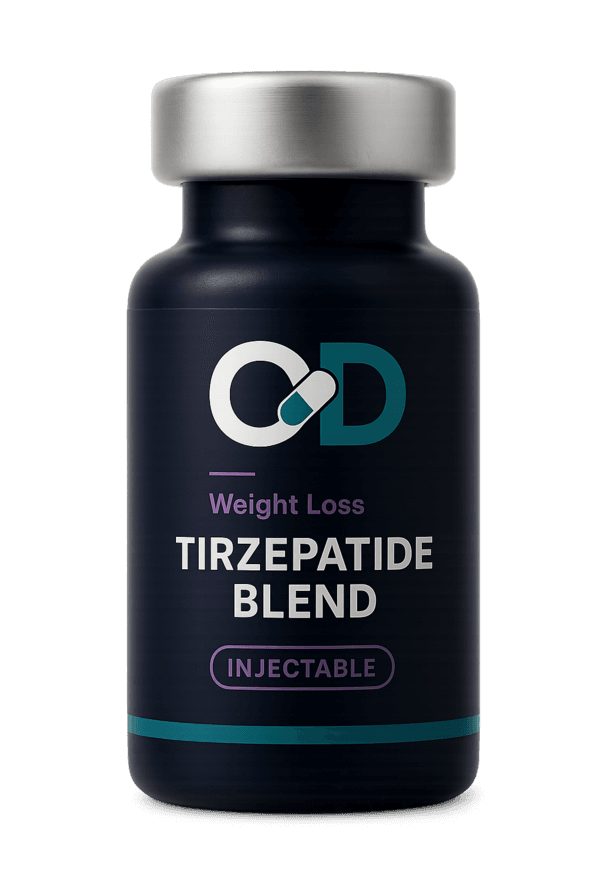
MetabolicWeight Loss
Tirzepatide Blend
Compounded Injectable Vial
A compounded dual GIP/GLP-1 injectable for medically supervised weight management. Prescribed only after a licensed provider reviews your health intake.
Adjustable dose · 2.5–20 mg/mL
from $138.29

MetabolicWeight Loss
Semaglutide
Compounded GLP-1 Injectable — coming soon
A GLP-1 injectable for weight management — launching soon at OpenDoseRx, dispensed after licensed provider review.
Launching soon
View details
MetabolicWeight Loss
Metformin XR
Extended-Release 500–1000 mg Tablets
Extended-release metformin for blood sugar support. A gradual-release format prescribed as part of a provider-directed metabolic plan.
3 strengths available
from $39.99 · 500 mg XR
$45.00 Save $5.01

MetabolicWeight Loss
Metformin IR
Immediate-Release 250–1000 mg Tablets
Immediate-release metformin, a long-established option for blood sugar support. Prescribed and monitored by a licensed provider.
4 strengths available
from $34.00 · 250 mg IR

MetabolicWeight Loss
Acarbose
Acarbose 25–100 mg Tablets
An oral medication that slows carbohydrate breakdown in the gut, easing post-meal glucose spikes. Prescribed within a provider-directed metabolic plan.
3 strengths available
from $34.99 · 25 mg
Learn
Guides for Metabolic health
6 min
How metformin works: the biguanide mechanism
A neutral, mechanism-focused look at how metformin, a biguanide, is understood to act on the liver, insulin sensitivity, and AMPK signaling.
7 min
How acarbose is understood to work: the alpha-glucosidase inhibitor pathway
A neutral, mechanism-focused look at how acarbose, an alpha-glucosidase inhibitor, is understood to act on the enzymes that digest carbohydrates in the small intestine.
8 min
Extended-release vs. immediate-release metformin: how the formulations differ
A neutral, formulation-focused look at how extended-release and immediate-release metformin differ in the way each tablet releases the drug, and how that shapes absorption over time.
7 min
Low-dose naltrexone (LDN): the history and proposed mechanism
A plain-language history of naltrexone — how it was developed as an opioid antagonist — and the low-dose opioid-rebound and immune-modulation mechanisms studied in research.
8 min
What incretins are: GIP, GLP-1, and the hormones behind dual-action medications
A plain-language look at the gut hormones behind incretin-based medications — what GIP, GLP-1, and glucagon are, and why one dual-action molecule is designed to engage two of these pathways at once.
8 min
Insulin resistance: how insulin sensitivity is understood to work
A neutral, mechanism-focused look at how insulin normally signals cells to take up glucose, and what researchers mean when tissues become less responsive to that signal.
How it works
From your dose to your door
Choose your strength
Pick your exact dose and pack size — the full price is visible before you commit.
Complete a short intake
Answer a short set of health questions — this is what the provider reviews.
A licensed provider reviews
An independent U.S. provider decides if it's appropriate — declined orders are refunded in full.
Ships from a licensed U.S. pharmacy
Approved orders typically ship within 1–2 business days, then 3–5 business days in transit.
- Licensed providersLicensed U.S. providers
- Licensed pharmaciesLicensed U.S. pharmacies
- Encrypted & privateEncrypted & private
- Free shipping $200+Free shipping on $200+
- Refund if declinedFull refund if declined