Guide
What incretins are: GIP, GLP-1, and the hormones behind dual-action medications
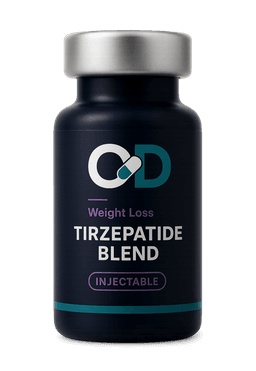 Discussed in this guideTirzepatide Blendfrom $138.29
A plain-language look at the gut hormones behind incretin-based medications — what GIP, GLP-1, and glucagon are, and why one dual-action molecule is designed to engage two of these pathways at once.
On this page
What incretins are
Incretins are hormones the gut releases in response to food. The name points to a longstanding observation researchers call the "incretin effect": a dose of glucose taken by mouth tends to trigger a larger insulin response than the same amount of glucose delivered directly into a vein. The difference is attributed to signals that come from the gut itself once nutrients arrive, rather than from the bloodstream alone. In humans, most of this effect is understood to be carried by two hormones — GIP and GLP-1.
The word "incretin" describes a function: an intestinal secretion that increases insulin release. Both GIP and GLP-1 are small peptides, and both are released when nutrients reach the intestine, with carbohydrate and fat generally acting as stronger triggers than protein. Because they respond to eating, they are sometimes described as part of the body's system for coordinating digestion with how the pancreas handles a meal.
Understanding these native hormones is the foundation for understanding the class of prescription medications often called incretin-based therapies. This article focuses on the hormones themselves — what they are, where they come from, and how they signal — rather than on any particular product. It is educational only and is not medical advice.
GIP: the first incretin to be identified
GIP stands for glucose-dependent insulinotropic polypeptide. It is secreted by enteroendocrine K cells in the upper part of the small intestine, in the region of the duodenum and jejunum. GIP was the first of the two incretins to be purified and characterized: work by John Brown and colleagues in the early-to-mid 1970s isolated the hormone. It was originally named "gastric inhibitory polypeptide" for an observed effect on gastric acid secretion, and later renamed to reflect what came to be seen as its more prominent role — prompting insulin release — while keeping the same initials.
Through its own receptor, GIP is understood to encourage the pancreas to release insulin in a glucose-dependent way, meaning the signal is tied to blood sugar being elevated rather than acting regardless of glucose level. That glucose-dependence is a feature often noted in discussions of this hormone family, because it is associated with a lower tendency to push blood sugar too low. GIP receptors are also found in tissues beyond the pancreas, including fat cells, and the hormone is studied in the context of how the body handles nutrients after a meal.
GIP's relationship to glucagon — a hormone discussed further below — is understood to differ from that of GLP-1. Under some conditions, GIP is described as able to support glucagon signaling rather than suppress it. The details of these interactions are an active area of research, which is one reason the incretin system is usually described as a set of overlapping signals rather than a single on-off switch.
GLP-1: the second incretin and its wider signaling
GLP-1 stands for glucagon-like peptide-1. It is produced mainly by enteroendocrine L cells in the more distal part of the gut. Its discovery came through genetics: in 1983, a laboratory led by Graeme Bell cloned the proglucagon gene and found that this single gene encodes several peptides beyond pancreatic glucagon. The structure of GLP-1 and its insulin-stimulating action were identified a few years later, in the late 1980s, establishing it as a second incretin hormone alongside GIP.
Acting through the GLP-1 receptor, GLP-1 is understood to be involved in glucose-dependent insulin signaling from the pancreas, much like GIP. It is also associated with a broader set of signals:
- It is understood to suppress glucagon under normal and elevated glucose conditions (though not during low blood sugar)
- To slow the rate at which the stomach empties
- To participate in appetite and satiety signaling in the brain
These wider actions are part of why GLP-1 has been studied so extensively.
Both GIP and GLP-1 share a practical limitation as natural hormones: they are broken down within minutes by an enzyme called DPP-4 (dipeptidyl peptidase-4), so only a small fraction of the active hormone circulates for long. This very short half-life is central to understanding the medications in this class, because a peptide that disappears in minutes is not, on its own, practical as a once-weekly treatment. That constraint shaped how incretin-based medications were designed.
Why a dual-action medication engages two incretin pathways
Because native GIP and GLP-1 are cleared within minutes by DPP-4, the prescription medications in this class are engineered peptides designed to resist that breakdown and to act over a longer window than the natural hormones. A GLP-1 receptor agonist is a molecule built to engage a single incretin receptor. A dual GIP/GLP-1 receptor agonist is a single molecule designed to engage both incretin receptors at once — tirzepatide is the established example of this dual-action design.
The rationale for combining the two came from earlier research understood to suggest that engaging the GIP and GLP-1 pathways together could complement one another, drawing on the distinct signaling each hormone contributes. Tirzepatide is a single compound structured to reach both receptors, and it received FDA approval in 2022 for type 2 diabetes, with a later FDA approval for chronic weight management. Whether a single-receptor or dual-receptor mechanism is appropriate for a given person, and how it fits their history and tolerability, is a clinical judgment that belongs to a licensed provider, not something an article can determine.
One point of accuracy matters here. FDA-approved tirzepatide is a specific manufactured product. Some pharmacies have prepared compounded formulations described as GLP-1 or GIP/GLP-1 products; compounded medications are not FDA-approved, because the FDA approves finished manufactured products rather than the individualized preparations a pharmacy compounds for a single prescription. A product listing should make that distinction clear, and whether any such preparation is appropriate is a decision for the reviewing provider.
How this connects to prescription review on OpenDoseRx
This article is background biology, not a recommendation. On OpenDoseRx, the medical decision rests with a clinician rather than the shopper. You begin by choosing a product and strength, then complete a medical intake covering your health history and other relevant information.
That intake is routed to an independent, licensed U.S. provider who reviews it and decides whether a prescription is appropriate for you — a clinical judgment, never automatic. If the provider approves, the prescription is prepared and dispensed by a licensed U.S. pharmacy and shipped to you. If the request is declined, your order does not proceed and you receive a full refund for the medication.
Every product on the site is prescription-only, and nothing here is a substitute for a conversation with your own healthcare provider. Understanding what incretins are can help you ask better questions; the decision about any specific medication still belongs to the licensed provider who reviews your intake.
Common questions
- What is the incretin effect?
- It is the long-observed finding that glucose taken by mouth tends to trigger a larger insulin response than the same amount of glucose given directly into a vein. The difference is attributed to hormones the gut releases when nutrients arrive. In humans, GIP and GLP-1 are understood to carry most of this effect.
- Is glucagon an incretin?
- No. Glucagon is made by the pancreas and generally acts to raise blood sugar, broadly opposite to insulin, so it is not classed as an incretin. It is related to GLP-1 because both are produced from the same precursor protein, proglucagon, which is why GLP-1 is named a "glucagon-like" peptide.
- Why aren't the natural incretin hormones used as medications on their own?
- Native GIP and GLP-1 are broken down within minutes by the enzyme DPP-4, giving them very short half-lives. The prescription medications in this class are engineered peptides designed to resist that breakdown and act over a longer window, which is a key difference between the hormones your body makes and the medications built to engage the same receptors.
- What makes tirzepatide a "dual-action" medication?
- Tirzepatide is designed as a single molecule that engages two incretin receptors — the GIP receptor and the GLP-1 receptor — whereas a GLP-1 receptor agonist engages one. This dual-receptor design is descriptive of the mechanism; whether it is appropriate for a given person is a decision for a licensed provider.
- Are compounded GLP-1 or GIP/GLP-1 products FDA-approved?
- No. The FDA approves finished, manufactured products, not the individualized preparations a pharmacy compounds for a single prescription, so a compounded medication is not FDA-approved even when it contains a similar active ingredient. A product listing should state which pathway applies, and whether any preparation is appropriate is a clinical decision for the reviewing provider.
Ready when you are
Tirzepatide Blendfrom $138.29
- Your exact strength
- Licensed provider review
- Full refund if declined
Browse metabolic health
Exact strengths and prices up front — reviewed by a licensed U.S. provider.
Keep reading
More plain-language guides on this topic.
How metformin works: the biguanide mechanism
A neutral, mechanism-focused look at how metformin, a biguanide, is understood to act on the liver, insulin sensitivity, and AMPK signaling.
How acarbose is understood to work: the alpha-glucosidase inhibitor pathway
A neutral, mechanism-focused look at how acarbose, an alpha-glucosidase inhibitor, is understood to act on the enzymes that digest carbohydrates in the small intestine.
Extended-release vs. immediate-release metformin: how the formulations differ
A neutral, formulation-focused look at how extended-release and immediate-release metformin differ in the way each tablet releases the drug, and how that shapes absorption over time.
This guide is for general education and is not medical advice. Compounded medications are not FDA-approved drugs, and statements on this site have not been evaluated by the FDA. A licensed provider reviews every prescription request.