Guide
How receptors, agonists, and antagonists work
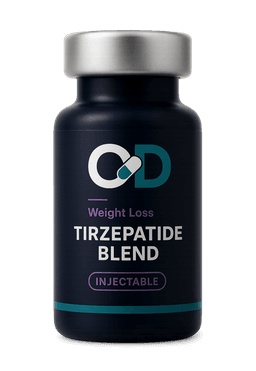 Discussed in this guideTirzepatide Blendfrom $138.29
A plain-language, mechanism-focused introduction to how receptors receive chemical signals and how agonists switch a pathway on while antagonists block it.
On this page
What a receptor is and why binding matters
A receptor is a protein, usually sitting on the surface of a cell or inside it, that is understood to act like a receiver for a specific chemical signal. The body constantly sends such signals in the form of hormones, neurotransmitters, and other messenger molecules. A receptor is shaped so that only molecules with a matching shape and chemistry can settle into it, an arrangement often compared to a lock that accepts a particular key. The molecule that fits is called a ligand.
The moment a ligand binds is not the end of the story but the beginning of it. Binding is understood to change the receptor's shape slightly, and that change is what sets off events inside the cell, a process called signal transduction. In this sense a receptor behaves like a switch or a relay: a chemical arriving on the outside is translated into an instruction on the inside, such as producing an internal messenger molecule, opening an ion channel, or altering which genes a cell reads. The signal itself carries no force; it is the receptor that decides what happens next.
Many prescription medications are designed around this same principle. Rather than inventing a brand-new biological function, a drug molecule is typically built to engage a receptor the body already uses. Whether that engagement switches the pathway on or shuts it down depends on how the molecule interacts with the receptor once it is bound, which is exactly the distinction the rest of this guide describes. This article is educational and describes how these concepts are generally understood; it is not medical advice and does not recommend any medication for any person or purpose.
How an agonist switches a pathway on
An agonist is a molecule that binds a receptor and activates it, producing the same kind of response the body's own signaling chemical would. In effect, an agonist mimics the natural ligand: it fits into the receptor, triggers the shape change, and sets the downstream signaling cascade in motion. If the receptor is a switch, an agonist is understood to flip it to the on position. This is why agonists are described as turning a pathway on rather than merely occupying it.
A useful real-world category is the GLP-1 receptor agonist. The gut releases a hormone called glucagon-like peptide-1 after eating, and that hormone normally acts on the GLP-1 receptor. Medications described as GLP-1 receptor agonists, such as semaglutide and tirzepatide, are engineered to engage that same receptor much as the natural hormone would, and are structured to resist the rapid breakdown the natural hormone undergoes. The point here is mechanistic: an agonist is defined by the fact that it activates the receptor it binds.
Agonists are not all equal in how strongly they activate a receptor. A full agonist is understood to produce the receptor's maximal response, while a partial agonist binds the same site but produces only a submaximal response even when every receptor is occupied. This is why two molecules can both be agonists of the same receptor yet be characterized quite differently. Crucially, an agonist does not create a new capability in the cell; it engages a pathway that already exists, which is why the biology of the receptor itself shapes what activation can and cannot do.
How an antagonist blocks the pathway
An antagonist is, in a sense, the mirror image of an agonist. It also binds the receptor, but it does not activate it. Instead it occupies the binding site the way a key that fits the lock but will not turn it would, and by sitting there it prevents the body's own ligand from binding and switching the pathway on. An antagonist is therefore described as blocking or dampening a pathway rather than triggering one. When an antagonist competes with the natural ligand for the same site, it is called a competitive antagonist, and how much blocking occurs depends on the relative amounts of each molecule present.
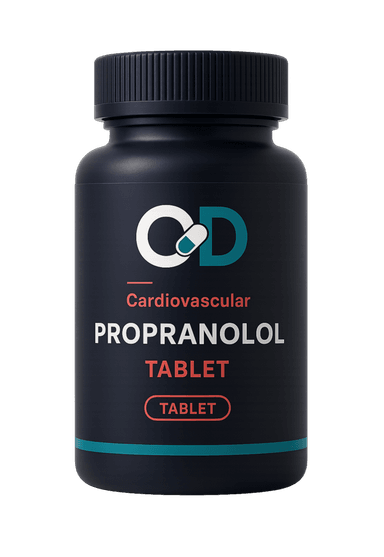
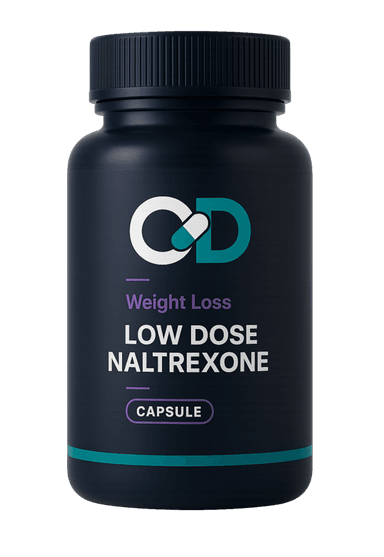
Two familiar examples come from different receptor families. Beta blockers, known more formally as beta-adrenergic antagonists, are understood to occupy beta-adrenergic receptors so that adrenaline and noradrenaline cannot activate them; propranolol is one member of this class. Naltrexone is generally described as an opioid receptor antagonist, understood to occupy opioid receptors without switching them on. In both cases the mechanism is the same idea: the molecule takes the seat but does not send the signal.
Because an antagonist works by occupancy rather than activation, its effect is tied to the presence of the natural signal it is competing with. Where there is little of the body's own ligand around, a blocked receptor may make little observable difference; where signaling is high, the same occupancy competes more visibly. This is a mechanistic description only, not a statement about what any individual will experience, which depends on the person and is a matter for clinical judgment rather than a general article.
Affinity, selectivity, and the shades in between
Pharmacology separates two properties that are easy to blur together. The first is affinity, meaning how tightly a molecule binds its receptor and how readily it stays there. The second is efficacy, meaning what the molecule does once it is bound. Agonists and antagonists can both have high affinity; the difference lies in efficacy, because an agonist activates and an antagonist does not. Keeping these two ideas separate is what makes it possible to describe a molecule that grips a receptor firmly yet triggers nothing at all.
A second dimension is selectivity. Receptors often come in closely related subtypes found in different tissues, and a molecule may prefer one subtype over another. Beta-adrenergic receptors, for instance, include beta-1 and beta-2 subtypes; an agent that engages one much more readily than the other is described as selective for it, while one that engages both with little distinction is described as non-selective. Selectivity is usually a matter of degree rather than an absolute, and it can shift with the amount of molecule present.
Between the clean poles of agonist and antagonist sit several in-between categories worth knowing by name:
- A partial agonist activates a receptor only partway.
- An inverse agonist binds a receptor that has some baseline activity of its own and is understood to push that activity below its resting level.
- An allosteric modulator binds a site other than the main one and tunes the receptor's response up or down rather than switching it directly.
- A further wrinkle is that a single molecule can behave as an agonist in one tissue and an antagonist in another; selective estrogen receptor modulators, or SERMs, such as tamoxifen and raloxifene, are often described this way.
These categories show that on and off are the endpoints of a spectrum, not the only two options.
One framework, many medications
The value of the receptor-agonist-antagonist vocabulary is that it describes an enormous range of medications with a single logic. Hormone pathways, neurotransmitter systems, and immune and metabolic signaling all rely on receptors, so the same questions apply throughout: which receptor does this molecule bind, does it activate that receptor or block it, how tightly does it bind, and how selective is it? Once those questions are answered, much of how a molecule is understood to act falls into place, whatever condition it happens to be discussed in.
This framework describes mechanism only. It does not establish that any molecule produces a particular result in a particular person, and this guide makes no such claim. Where a product is a compounded preparation, it is not an FDA-approved drug, and statements about it have not been evaluated by the FDA. Nothing here is medical advice or a recommendation; it is a description of how receptors, agonists, and antagonists are generally understood to work.
Whether any medication, and any strength of it, is appropriate for a given person is a clinical judgment that depends on that person's full medical picture. That decision belongs to an independent licensed provider, not to a general article and not to the person requesting a product. Understanding the mechanism can make a conversation with a provider more informed, but it does not replace that conversation or an in-person evaluation.
How prescription review works on OpenDoseRx
OpenDoseRx is a platform for requesting prescription products through a structured review process; it does not itself practice medicine. The steps are the same across the catalog. You begin by choosing a product and strength and completing a medical intake, a set of questions about your health history and current situation. That intake is then routed to an independent, licensed U.S. provider for review.
The provider makes the clinical decision. If the provider determines that a request is appropriate, the approved order is filled by a licensed U.S. pharmacy and shipped to you, and any dosing is set by the provider rather than selected by you. If the provider declines the request, the order does not proceed and you receive a full refund.
This process is educational and is not a substitute for your own healthcare provider or for an in-person evaluation. Where a product is a compounded preparation, it is not an FDA-approved drug, and statements about it have not been evaluated by the FDA. Nothing here should be read as a promise of any particular outcome; it is a description of how these mechanisms are understood and how a request is reviewed.
Common questions
- What is the difference between an agonist and an antagonist?
- Both bind the same kind of receptor, but they do opposite things once bound. An agonist activates the receptor, mimicking the body's own signal and switching the pathway on. An antagonist occupies the receptor without activating it, blocking the natural signal so the pathway is not switched on. The difference is activation, not binding.
- What does it mean for a molecule to "bind" a receptor?
- Binding means the molecule settles into a receptor whose shape and chemistry match it, much like a key fitting a lock. Binding on its own does not determine the outcome. An agonist that binds also turns the receptor's shape-change into an internal signal, while an antagonist that binds simply occupies the site. How tightly a molecule binds is called its affinity.
- What is a partial agonist?
- A partial agonist binds a receptor and activates it, but only partway, so it produces a submaximal response even when every receptor is occupied. It sits between a full agonist, which produces the receptor's maximal response, and an antagonist, which produces no activation at all. It is one of several in-between categories, alongside inverse agonists and allosteric modulators.
- Who decides whether a medication is appropriate for me?
- That decision belongs to an independent, licensed U.S. provider who reviews your medical intake, not to you and not to this guide. You can request a product and strength; the provider determines whether the request is appropriate and sets any dosing. Approved orders are filled by a licensed U.S. pharmacy, and declined orders are refunded in full.
Ready when you are
Tirzepatide Blendfrom $138.29
- Your exact strength
- Licensed provider review
- Full refund if declined
Also relevant
Exact strengths and prices up front — a licensed provider reviews every request.
Browse treatments
Exact strengths and prices up front — reviewed by a licensed U.S. provider.
Keep reading
The guides that explain how ordering and review work.
How online prescriptions work: intake, provider review, and pharmacy
A plain-language walkthrough of the telehealth path — from choosing a strength to intake, independent provider review, and licensed U.S. pharmacy fulfillment.
Compounded vs. FDA-approved medications: what's the difference?
A plain-language look at what "FDA-approved" and "compounded" actually mean, why both exist, and how each is regulated.
What a medical intake covers and why it matters
A plain-language look at the categories of information a telehealth intake collects and how each one gives a reviewing provider the context to make a clinical decision.
This guide is for general education and is not medical advice. Compounded medications are not FDA-approved drugs, and statements on this site have not been evaluated by the FDA. A licensed provider reviews every prescription request.