Guide
What a peptide is and how the body reads it
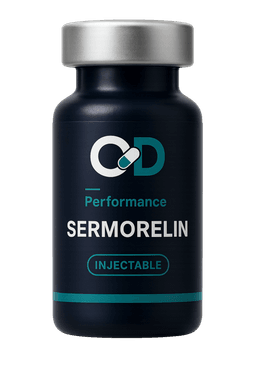 Discussed in this guideSermorelinfrom $107.60
A plain-language look at what peptides are, where they sit between small-molecule drugs and proteins, and how the body reads their sequence as a signal.
On this page
What a peptide is
A peptide is a short chain of amino acids linked together in a specific order. Amino acids are the basic building blocks the body uses to assemble almost everything made of protein, and there are twenty standard ones. When two of them join, the connection is called a peptide bond, and a string of these bonds forms the backbone of the molecule. In that sense a peptide is less like a single ingredient and more like a short word spelled out in an amino-acid alphabet.
Chemists describe peptides by their length. Two amino acids joined together form a dipeptide, three form a tripeptide, and a longer run is often called an oligopeptide or a polypeptide. The exact boundary is a convention rather than a hard rule, but chains of roughly fifty amino acids or fewer are generally described as peptides, while longer chains that fold into elaborate shapes are usually called proteins. The distinction matters because size and folding change how a molecule behaves in the body.
The order of the amino acids is the defining feature. Two peptides can contain the same building blocks in different sequences and behave as entirely different molecules, in the same way that rearranging letters produces a different word. This sequence is what gives a peptide its identity, its shape, and, as the sections below describe, the specific signal the body is able to read from it.
Where peptides sit between small molecules and proteins
It helps to picture a size spectrum. At one end are small-molecule drugs, the category most conventional medicines belong to. These are compact chemical structures, typically built through chemical synthesis, and many are small enough to be swallowed and absorbed and to slip across cell membranes to reach targets inside the cell. Familiar oral tablets are usually small molecules. Because they are compact and stable, they can often be formulated as pills.
At the other end are proteins, sometimes called biologics. These are long amino-acid chains that fold into intricate three-dimensional structures, and they can be many times larger than a peptide. Antibodies used as medicines are a well-known example. Their size and complex folding generally mean they cannot survive digestion intact and are administered by injection rather than as a pill.
Peptides occupy the middle ground. They are larger and more structurally specific than a typical small molecule but shorter and simpler than a full protein. This in-between size is central to how they are understood to work: a peptide is big enough to carry a precise, recognizable shape that fits a particular receptor, yet it lacks the elaborate folded architecture of a large protein. Many hormones the body makes on its own, such as insulin and glucagon, are peptides, which is part of why peptide-based medicines are studied so closely.
This positioning also shapes how peptides are made and handled. Some are produced by chemical synthesis like small molecules, and others by biological systems like proteins. Where a specific peptide preparation falls, and whether it is a manufactured approved drug or a compounded preparation, is a separate question. Compounded preparations are not FDA-approved drugs, and any statements about them have not been evaluated by the FDA.
How the body reads a peptide's sequence and shape
The body does not read a peptide by counting its atoms. It reads the molecule by shape and chemistry. As the amino-acid chain forms, it folds and bends into a characteristic contour with a particular pattern of electrical charges and chemical features along its surface. That contour is dictated by the sequence, which is why the order of the amino acids is so important. A different sequence produces a different shape, and therefore a different message.
Cells carry receptors, which are proteins that act like locks waiting for a specific key. When a peptide with a matching shape encounters its receptor, it fits into a binding pocket and attaches. This complementary fit is often described with the lock-and-key image, though in practice the receptor and peptide can flex and adjust to each other as they bind. The essential point is selectivity: a receptor is generally shaped to recognize one peptide or a small family of closely related ones, and it largely ignores molecules that do not match.
Reading is therefore an act of recognition rather than consumption. The peptide does not need to be taken apart or absorbed into the cell to deliver its message. It simply has to touch the right receptor with the right shape. Once that contact is made, the receptor changes and passes a signal onward, which is the subject of the next section.
Peptides as signaling molecules
Many peptides function as signaling molecules, meaning their job is to carry information from one place to another rather than to serve as structural material or fuel. In this role a peptide behaves like a messenger. It is released, it travels to a target tissue, and it binds a receptor there to communicate an instruction. Peptide hormones and neuropeptides both work this way, and the body relies on this messaging constantly to coordinate processes across different organs.
A common feature of peptide signaling is that the message is delivered at the cell surface. Because peptides are relatively large and water-soluble, most do not cross the fatty cell membrane on their own. Instead they bind receptors that sit in the membrane with one part facing outward. When the peptide docks on the outside, the receptor relays the signal to the inside of the cell, often by activating a chain of internal molecules sometimes called second messengers. This is a key contrast with small lipid-soluble hormones, such as steroid hormones, which can pass through the membrane and act on targets within the cell.
This signaling logic is why so much research attention focuses on peptides. Naturally occurring examples include:
- Insulin, which is involved in glucose regulation
- GLP-1, a gut hormone involved in glucose-dependent insulin signaling
- Oxytocin, involved in a range of physiological signaling
Peptide medicines are often designed to resemble one of these natural messengers so that they engage the same receptor. Whether a given peptide preparation is appropriate for any individual is a clinical judgment for a licensed provider, and this article describes mechanisms rather than making any claim about outcomes.
Why peptides are usually injected and how the body clears them
The same features that make peptides precise messengers also make them fragile in the digestive tract. The gut is full of enzymes called proteases, whose ordinary function is to break dietary protein down into individual amino acids by cutting peptide bonds. A peptide swallowed as a pill is exposed to these enzymes and to stomach acid, and much of it can be broken apart before it is absorbed. On top of that, the intestinal wall does not readily let intact peptides pass into the bloodstream. For these reasons many peptide products are prepared for routes that bypass the gut, such as subcutaneous injection, and some are studied in nasal, sublingual, or topical forms depending on the molecule.
Once a peptide is in the body, the same protease machinery also limits how long it lasts. Enzymes in the blood and tissues steadily cleave peptides back into fragments and amino acids, so a natural peptide signal often fades quickly, which is useful for a messenger that should not linger. Some peptide medicines are deliberately engineered with structural changes that slow this breakdown, allowing the molecule to resist certain enzymes and remain recognizable to its receptor for longer than the natural version would.
None of this describes how any product should be used. Formulation, route, and any schedule are determined by the prescribing provider for the specific preparation and person, and they are outside the scope of this educational overview. The point here is simply mechanistic: a peptide's size and chemistry explain why it is typically delivered by injection or another non-oral route and why the body tends to clear it over time.
This guide is educational, and a provider makes every decision
This article is educational and is not medical advice, a diagnosis, or a recommendation of any specific treatment. It describes how peptides are structured and how they are generally understood to act as signaling molecules. It does not tell any individual what is right for them, and it makes no claim that any peptide treats, cures, or improves any condition. Compounded peptide preparations are not FDA-approved drugs, and statements about them have not been evaluated by the FDA.
Because peptides are prescription products when used as medicines, the decision to prescribe belongs to a licensed clinician, not to a shopper or to a general article. On OpenDoseRx, you begin by selecting a product and strength and then complete a medical intake covering your health history, current medications, allergies, and relevant conditions. That intake is reviewed by an independent, licensed U.S. provider.
If the provider determines a prescription is appropriate, it is sent to a licensed U.S. pharmacy for fulfillment. If the request is declined, the medication is not dispensed and you are not charged for it. Nothing here replaces a conversation with your own provider, and every product is dispensed only after independent clinical review.
Common questions
- What is the difference between a peptide and a protein?
- Both are chains of amino acids linked by peptide bonds, and the difference is largely one of length and folding. Shorter chains, generally around fifty amino acids or fewer, are usually called peptides, while longer chains that fold into complex three-dimensional structures are called proteins. The boundary is a convention rather than a strict rule.
- How is a peptide different from a small-molecule drug?
- A small-molecule drug is a compact chemical structure that is often stable enough to be swallowed and small enough to cross cell membranes and reach targets inside the cell. A peptide is larger and more structurally specific, and it typically acts by binding a receptor at the cell surface rather than entering the cell. That size difference is also why many peptides are given by injection instead of as a pill.
- What does it mean that a peptide is a signaling molecule?
- It means the peptide's role is to carry information rather than to serve as structural material or fuel. It binds a matching receptor, usually on the outside of a cell, and that contact prompts the receptor to relay a message inside the cell. Many hormones the body makes, such as insulin and GLP-1, are peptides that work this way.
- Why can't most peptides be taken as a pill?
- The digestive tract contains enzymes called proteases that break peptide bonds, and the gut wall does not readily absorb intact peptides. A swallowed peptide can be broken down before it reaches the bloodstream, which is why many peptide products are prepared for injection or other non-oral routes. How any specific product is used is determined by a prescribing provider.
Ready when you are
Sermorelinfrom $107.60
- Your exact strength
- Licensed provider review
- Full refund if declined
Also relevant
Exact strengths and prices up front — a licensed provider reviews every request.
Browse treatments
Exact strengths and prices up front — reviewed by a licensed U.S. provider.
Keep reading
The guides that explain how ordering and review work.
How online prescriptions work: intake, provider review, and pharmacy
A plain-language walkthrough of the telehealth path — from choosing a strength to intake, independent provider review, and licensed U.S. pharmacy fulfillment.
Compounded vs. FDA-approved medications: what's the difference?
A plain-language look at what "FDA-approved" and "compounded" actually mean, why both exist, and how each is regulated.
What a medical intake covers and why it matters
A plain-language look at the categories of information a telehealth intake collects and how each one gives a reviewing provider the context to make a clinical decision.
This guide is for general education and is not medical advice. Compounded medications are not FDA-approved drugs, and statements on this site have not been evaluated by the FDA. A licensed provider reviews every prescription request.