Guide
How niacinamide works in the skin
 Discussed in this guideClarity Creamfrom $180.00
A plain-language look at the biology of niacinamide in skin cells — how the vitamin B3 derivative feeds the NAD and NADP coenzyme pool that participates in cellular energy reactions and lipid synthesis.
On this page
What niacinamide is: vitamin B3 in the skin
Niacinamide, also written as nicotinamide, is one of the two common forms of vitamin B3, the other being niacin (nicotinic acid). Both are water-soluble members of the B-vitamin family, and the body can interconvert them along shared metabolic pathways. Chemically, niacinamide is the amide form of the vitamin, a small, stable molecule that dissolves readily in water — a property often noted when it is discussed as an ingredient in topical formulations.
Vitamin B3 is what biochemists call an essential micronutrient: human cells cannot synthesize enough of it from scratch to meet their needs and rely on dietary sources and internal recycling pathways. Skin, like every other tissue, contains cells that draw on this vitamin B3 pool. When niacinamide is described in a skincare context, the underlying interest is usually in that biochemistry — what the molecule is understood to become inside cells and which reactions it participates in.
This article is educational and describes how niacinamide is understood to work at the level of cell biology. It is not medical advice, does not diagnose or address any skin condition, and is not a recommendation of any product. Whether a particular skin concern warrants care, and what that care should be, is a decision for a licensed provider who can evaluate an individual.
From niacinamide to NAD and NADP
The central reason niacinamide is discussed in cell biology is that it is a precursor to two closely related coenzymes: nicotinamide adenine dinucleotide (NAD) and its phosphorylated relative, nicotinamide adenine dinucleotide phosphate (NADP). A coenzyme is a helper molecule that many enzymes require in order to carry out their reactions. Niacinamide supplies the nicotinamide portion of these molecules, which is why it is described as a building block that feeds the cellular NAD and NADP pool.
Cells assemble NAD from niacinamide through what is called the salvage pathway — a recycling route that reclaims nicotinamide and rebuilds it back into NAD rather than making the coenzyme entirely from other precursors. Because NAD is continually consumed and regenerated in the course of normal metabolism, this salvage route is understood to be an important way cells keep their NAD supply topped up. NADP is then formed from NAD by adding a phosphate group, giving cells a related but distinct coenzyme used in a different set of reactions.
It is worth stating plainly what this connection is and is not. Describing niacinamide as a precursor to NAD and NADP is a statement about biochemistry — where the molecule sits in a metabolic pathway. It is not a claim that applying or taking niacinamide produces any particular result in a person's skin, and this guide makes no such claim.
NAD, NADP, and the chemistry of cellular energy
NAD and NADP are best known as electron carriers. In the reactions that release energy from nutrients — glycolysis and the metabolic cycles inside mitochondria — NAD shuttles electrons by cycling between an oxidized form (NAD+) and a reduced form (NADH). This cycling is a core part of how cells convert the chemical energy in food into ATP, the molecule cells use as an energy currency. Skin cells such as keratinocytes are metabolically active, continually being generated and maturing as they move toward the surface, and like all cells they depend on this NAD-linked energy chemistry.
NAD is also understood to be more than an energy carrier. It serves as a substrate — a raw material that is consumed — for several families of enzymes, including the PARP enzymes involved in DNA-repair signaling and the sirtuins involved in regulating other proteins. Because these enzymes use NAD up rather than simply borrowing it, the size of the cellular NAD pool is a subject of ongoing research interest. This is the general biochemical backdrop against which nicotinamide, as an NAD precursor, is frequently discussed.
NADP and its reduced form NADPH play a complementary role. Rather than feeding energy production directly, NADPH supplies the reducing power for biosynthetic reactions — the chemistry of building larger molecules — and for maintaining cells' internal antioxidant systems. Keeping these two coenzyme pools distinct helps explain why vitamin B3 is described as touching several different areas of cell chemistry at once.
Niacinamide and the skin's barrier lipids
The outermost layer of skin, the stratum corneum, is often described as a brick-and-mortar wall: flattened cells embedded in a matrix of lipids such as ceramides, cholesterol, and free fatty acids. Those lipids are manufactured by keratinocytes lower in the epidermis, and lipid synthesis is exactly the kind of biosynthetic chemistry that draws on NADPH as a source of reducing power. This is the mechanistic thread that connects vitamin B3 biochemistry to the barrier lipids.
In laboratory studies of the molecule, niacinamide has been examined for its relationship to lipid synthesis in skin cells, including the production of ceramides and related components of the barrier matrix. Researchers frame this in terms of the coenzyme pathways above — niacinamide feeding the NAD and NADP pool that the lipid-building machinery relies on. These are descriptions of studied mechanisms and associations, not conclusions about what any formulation does for a given person.
As with the energy chemistry, the caution bears repeating. That a molecule participates in a synthetic pathway in cell-culture or research settings does not establish an outcome in anyone's skin. Nothing in this section should be read as a claim that niacinamide restores, repairs, or changes the skin barrier; those are outcomes an educational overview cannot promise.
How niacinamide appears in topical formulations
Because niacinamide is small and water-soluble, it is commonly incorporated into water-based creams and serums, and it is often combined with other ingredients in a single formulation. It is worth distinguishing it from niacin (nicotinic acid), the other form of vitamin B3: the two are chemically different, and the vasodilation-related flushing sometimes associated with niacin is generally not attributed to niacinamide. When a product lists niacinamide or nicotinamide, it is referring to the amide form discussed throughout this article.
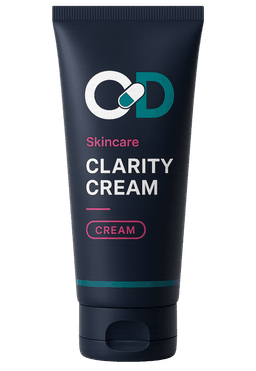
Some topical preparations discussed in a skincare context are compounded — prepared by a licensed pharmacy for an individual patient rather than mass-manufactured — and may combine niacinamide with other agents. Clarity Cream is one example of a compounded topical formulation referenced here only as a neutral category illustration, not as a purchase suggestion or a claim about results. Compounded medications are not FDA-approved products, and the statements in this guide have not been evaluated by the FDA. The vehicle a molecule is formulated in shapes whether it sits at the surface or reaches deeper, which is why formulation is treated as a considered choice rather than an afterthought.
How it works on OpenDoseRx
On OpenDoseRx, a licensed clinician — not the shopper — makes the medical decision. You choose a product and strength, then complete a medical intake with your health history. An independent, licensed U.S. provider reviews that intake and decides whether a prescription is appropriate for you. If it is, a licensed U.S. pharmacy prepares and ships it; if the provider declines, you are not charged for the medication and receive a full refund.
This article is educational only and is not a substitute for a conversation with your own healthcare provider.
Common questions
- What is niacinamide, and how is it different from niacin?
- Niacinamide (nicotinamide) and niacin (nicotinic acid) are the two common forms of vitamin B3. Niacinamide is the amide form: a small, water-soluble molecule. The body can interconvert the two along shared pathways, but they are chemically distinct, and the flushing sometimes associated with niacin is generally not attributed to niacinamide. This is a description of the chemistry, not a claim about what either form does in a person.
- Why is NAD mentioned whenever niacinamide comes up?
- Niacinamide is a precursor to the coenzymes NAD and NADP, which cells rebuild from it through a recycling route called the salvage pathway. NAD acts as an electron carrier in the reactions that release energy from nutrients and is also a substrate for enzymes involved in DNA-repair signaling and protein regulation, while NADP supplies reducing power for building molecules. Saying niacinamide feeds this pool is a statement about metabolic biochemistry, not a claim about an effect in the skin.
- Does a niacinamide product require a prescription?
- It depends on the specific product. Some compounded topical formulations that include niacinamide are prescription items dispensed through the OpenDoseRx flow. In that process you complete a medical intake, an independent licensed U.S. provider reviews it and decides whether a prescription is appropriate for you, and if so a licensed U.S. pharmacy prepares and ships it. If the provider declines, you are not charged for the medication and receive a full refund. The clinical decision is made by the reviewing provider, not by the shopper.
Ready when you are
Clarity Creamfrom $180.00
- Your exact strength
- Licensed provider review
- Full refund if declined
Browse skincare & dermatology
Exact strengths and prices up front — reviewed by a licensed U.S. provider.
Keep reading
More plain-language guides on this topic.
How tretinoin works: retinoids and skin cell turnover
A plain-language look at the biology of retinoids — how tretinoin engages retinoic-acid receptors and is understood to influence how the skin renews itself.
Copper peptides (GHK-Cu): the tripeptide-copper complex in skin
GHK-Cu is a tripeptide bound to a copper ion; this guide describes the complex and the skin-signaling roles attributed to it in the scientific literature.
How bimatoprost is understood to affect eyelash growth: the prostaglandin analog pathway
A plain-language look at how bimatoprost, a prostaglandin analog first used in glaucoma care, is understood to act on the eyelash growth cycle.
This guide is for general education and is not medical advice. Compounded medications are not FDA-approved drugs, and statements on this site have not been evaluated by the FDA. A licensed provider reviews every prescription request.