Guide
How sermorelin is understood to work: the growth hormone-releasing hormone pathway
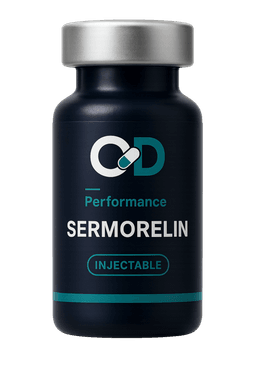 Discussed in this guideSermorelinfrom $107.60
A neutral, mechanism-focused look at growth hormone-releasing hormone (GHRH) and how the compounded peptide sermorelin is understood to act on the GHRH receptor in the pituitary.
On this page
What sermorelin is
Sermorelin is a synthetic peptide discussed in the context of the body's own growth hormone system. Chemically, it is an analogue of growth hormone-releasing hormone (GHRH), the natural hypothalamic hormone that signals the pituitary gland to release growth hormone. Naturally occurring GHRH is a chain of 44 amino acids, and research established that the first 29 of those amino acids carry its full signaling activity. Sermorelin corresponds to that active fragment — it is often written as GHRH(1-29) — which is why it is described as a GHRH analog rather than as growth hormone itself.
Because it is built to prompt the release of a hormone the body already makes, sermorelin belongs to a broader group of compounds generally called growth hormone secretagogues — molecules studied for their understood ability to stimulate the pituitary's secretion of growth hormone. It is a peptide, meaning a short chain of amino acids, and like most peptides it is not well absorbed when swallowed; preparations are therefore made for subcutaneous injection rather than as an oral tablet.
In the context described on this page, sermorelin is a compounded preparation. Compounded medications are prepared by a licensed pharmacy for an individual patient pursuant to a prescription and are not FDA-approved drugs; statements about compounded sermorelin have not been evaluated by the FDA. This article is educational only. It describes how the compound and the GHRH pathway are understood to work at a mechanistic level; it is not medical advice, a recommendation, or a statement about what any individual should expect. Whether sermorelin is appropriate for a given person is a clinical judgment that belongs to an independent licensed provider.
The GHRH pathway and how growth hormone is released
Growth hormone is produced by the anterior pituitary gland, a small structure at the base of the brain, and its release is governed by signals arriving from the hypothalamus just above it. Two hypothalamic hormones pull in opposite directions. Growth hormone-releasing hormone (GHRH) is the stimulatory signal: it travels the short distance to the pituitary and prompts specialized cells there — the somatotrophs — to synthesize and release growth hormone. Somatostatin is the opposing, inhibitory signal, understood to dampen that release. The interplay between these two hormones is what shapes how much growth hormone the pituitary puts out and when.
A defining feature of this system is that growth hormone is not released at a steady level but in bursts, or pulses, across the day and during sleep. GHRH is generally described as initiating those pulses, while somatostatin modulates their size. The result is a rhythmic, pulsatile pattern rather than a constant background level — a detail that matters when describing how any molecule acting on this pathway is understood to behave.
Once released, growth hormone travels through the bloodstream and acts on tissues throughout the body. One of its most-studied actions is on the liver, where it is understood to prompt the production of insulin-like growth factor-1 (IGF-1), a second messenger that mediates many of growth hormone's effects. Rising growth hormone and IGF-1 in turn feed back to the hypothalamus and pituitary, tending to increase somatostatin tone and quiet further release — a negative-feedback loop that keeps the system self-correcting. This is a description of the pathway's normal physiology, not a claim about any medication's effect.
How sermorelin is understood to act on the GHRH receptor
Because sermorelin corresponds to the active fragment of GHRH, it is described as a GHRH receptor agonist: a molecule built to bind and activate the same receptors on the pituitary's somatotroph cells that the body's own GHRH engages. In mechanistic terms, it is understood to occupy the GHRH receptor and relay the same stimulatory signal, prompting the somatotrophs to synthesize and release growth hormone. Its point of action is therefore the pituitary itself, at the top of the pathway described above.
This upstream point of action is the feature most often emphasized in explanations of sermorelin. Rather than introducing growth hormone into the body from an outside source, it is understood to act on the regulatory step that prompts the body's own pituitary to release it. A frequently noted consequence of acting at this level is that the released growth hormone remains subject to the body's existing controls — including somatostatin's opposing tone and the negative feedback from growth hormone and IGF-1. In that framing, the pulsatile character of release is described as preserved, because the pituitary is still the gatekeeper.
It is worth restating that everything here is a description of an understood or proposed mechanism, drawn from how sermorelin and the GHRH pathway are characterized in the scientific literature. It is not a promise that any specific hormonal change will occur, and it is not a statement about performance, body composition, aging, or any other outcome. How the axis responds in a given person is influenced by many individual factors, and the clinical relevance of these signaling steps for any one person is a matter for an independent licensed provider to assess.
Where sermorelin sits among growth hormone secretagogues
Growth hormone secretagogues — compounds studied for their understood ability to stimulate growth hormone release — are generally divided into two families that act on two different receptors. The first family is the GHRH analogs, which act on the GHRH receptor described above. Sermorelin belongs to this family, as do other GHRH-analog peptides discussed in the literature such as tesamorelin and CJC-1295. What these share is the receptor they engage: the same pituitary receptor the body's own GHRH uses.
The second family is generally called the ghrelin mimetics, or growth hormone-releasing peptides (GHRPs) — a group that includes peptides such as ipamorelin and GHRP-6 and non-peptide compounds such as MK-677. These are understood to act not on the GHRH receptor but on a separate receptor, the growth hormone secretagogue receptor (GHS-R1a), which is the receptor for the hormone ghrelin. Because the two families engage distinct receptors, they are described as acting through parallel but separate routes into the same pituitary output.
Placing sermorelin within this map is a description of its mechanistic category, not a comparison of appropriateness or a recommendation of one compound over another. Which family, which specific compound, or whether any of them is appropriate for a particular person is a clinical judgment that belongs to an independent licensed provider. This article describes where sermorelin sits among these molecules; it does not suggest that any of them is suitable for a given individual.
Regulatory status and important context
Sermorelin has an unusual regulatory history for a peptide of this kind. It was previously available as an FDA-approved product under the brand name Geref: the agency approved a formulation in 1990 as a diagnostic agent for evaluating the pituitary's capacity to secrete growth hormone, and a further approval in 1997 addressed a specific pediatric indication. The manufacturer discontinued the branded product in 2008. In a later determination, the FDA noted the product had not been withdrawn from sale for reasons of safety or effectiveness — a procedural point about why it left the market, not an endorsement of any current preparation.
Today, sermorelin is not marketed as an FDA-approved finished drug; the preparations available are compounded. As noted earlier, compounded medications are prepared by a licensed pharmacy for an individual patient pursuant to a prescription, and they are not FDA-approved, which means statements about them have not been evaluated by the agency. The historical existence of a since-discontinued approved product does not make a present-day compounded preparation FDA-approved. Anyone considering a compounded preparation should understand this distinction and discuss it, along with their full medical history, with a qualified provider.
This page provides no dosing guidance of any kind. Any question of strength, frequency, route, or duration is determined solely by a prescribing provider based on their independent evaluation of the individual. Nothing here should be read as instructing anyone how to use sermorelin or suggesting that it is suitable for them. The material is educational and mechanism-focused: it exists to describe what sermorelin is understood to be and how it is understood to interact with the GHRH pathway, so that a patient can have a more informed conversation with a licensed provider. It does not replace that conversation and does not establish a provider-patient relationship.
How prescription review works on OpenDoseRx
On OpenDoseRx, the process is built so that a clinician — not the shopper — makes the medical decision. You begin by choosing a product and strength, then complete a medical intake that collects your health history and other relevant information. Submitting a request is not the same as receiving a prescription; the request is what allows an independent clinical review to take place.
That intake is routed to an independent, licensed U.S. provider who reviews it and decides whether a prescription is appropriate for you. If the provider determines it is, the order is sent to a licensed U.S. pharmacy to be filled and shipped to you. If the request is declined, you are not charged for the medication and you receive a full refund. Compounded preparations are not FDA-approved drugs, and nothing here replaces a conversation with your own provider; no product is prepared or shipped without that independent clinical review.
Common questions
- What kind of molecule is sermorelin?
- Sermorelin is a synthetic peptide — a short chain of amino acids — that corresponds to the first 29 amino acids of growth hormone-releasing hormone (GHRH), the fragment understood to carry that hormone's full signaling activity. It is often written as GHRH(1-29) and is described as a GHRH analog and a growth hormone secretagogue. This describes what the molecule is, not any result, and it is educational only.
- How is sermorelin understood to act?
- It is understood to act as a GHRH receptor agonist, binding the same receptors on the pituitary's somatotroph cells that the body's own GHRH engages and relaying the signal that prompts those cells to release growth hormone. Because it acts at this upstream regulatory step, the released growth hormone is understood to remain subject to the body's existing controls, including somatostatin and negative feedback. This describes a signaling pathway only and is not a promise of any specific hormonal change or outcome.
- How does sermorelin differ from a peptide like ipamorelin?
- They are understood to act on different receptors. Sermorelin is a GHRH analog that engages the GHRH receptor, while ipamorelin belongs to the ghrelin-mimetic, or GH-releasing-peptide, family, which is understood to act on the separate growth hormone secretagogue receptor (GHS-R1a). Both are discussed as growth hormone secretagogues, but they take parallel, distinct routes to the same pituitary output. Noting this is a description of mechanism, not a recommendation of one over the other.
- Is sermorelin FDA-approved?
- Not as the preparations available today. Sermorelin was previously sold as an FDA-approved product (brand name Geref), which the manufacturer discontinued in 2008; the FDA later noted it had not been withdrawn for reasons of safety or effectiveness. Present-day sermorelin is compounded — prepared by a licensed pharmacy for an individual patient pursuant to a prescription — and compounded preparations are not FDA-approved, which means statements about them have not been evaluated by the FDA. It is prescription-only, and whether it is appropriate for a person is a decision for an independent licensed provider.
Ready when you are
Sermorelinfrom $107.60
- Your exact strength
- Licensed provider review
- Full refund if declined
Browse performance & vitality
Exact strengths and prices up front — reviewed by a licensed U.S. provider.
Keep reading
More plain-language guides on this topic.
How testosterone works in the body: the androgen pathway
A plain-language look at testosterone as an androgen and how androgen-receptor signaling is understood to act on tissues across the body.
How enclomiphene is understood to act on the HPG axis
An educational overview of how enclomiphene is understood to interact with the hypothalamic-pituitary-gonadal axis through estrogen-receptor modulation.
How aromatase inhibitors are understood to work in estrogen management
A neutral, mechanism-focused look at the aromatase enzyme and how the medications known as aromatase inhibitors are understood to act on it.
This guide is for general education and is not medical advice. Compounded medications are not FDA-approved drugs, and statements on this site have not been evaluated by the FDA. A licensed provider reviews every prescription request.