Guide
Subcutaneous vs. intramuscular injection
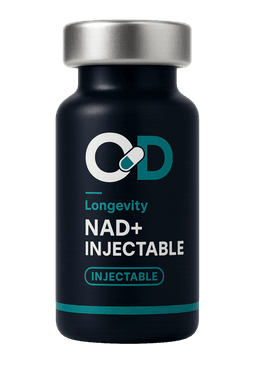 Discussed in this guideNAD+ Injectablefrom $87.60
A neutral, mechanism-focused look at where the subcutaneous and intramuscular routes place a medication — fat versus muscle — and how the surrounding tissue is understood to affect absorption.
On this page
Two routes, two tissue layers
Subcutaneous and intramuscular injection are two of the routes used to place a medication into the body with a needle. The names describe where the medication is deposited: a subcutaneous injection reaches the layer of fatty tissue just beneath the skin, while an intramuscular injection reaches the muscle underneath that layer. Both routes bypass the digestive tract, but they leave the medication in different tissues, and that difference is what this article describes.
This guide is about the routes themselves — the anatomy each one targets and how the surrounding tissue is understood to influence the pace at which a molecule is absorbed into the bloodstream. It does not provide injection instructions, and any technique, site, amount, or schedule is defined by the prescription and the prescribing provider rather than by educational content.
Both routes are used for prescription-only preparations, including compounded medications, which are not FDA-approved products. This article is educational only, is not medical advice, and does not recommend one route over another. Whether a given route is appropriate for a person is a clinical decision made by an independent licensed provider, informed by that person's health history rather than by a general explainer.
The layers beneath the skin
To understand the distinction, it helps to picture the tissue a needle passes through. The outermost layer is the skin itself — the thin epidermis and the dermis beneath it. Below the skin lies the subcutaneous layer, also called the hypodermis, which is made largely of fat and loose connective tissue. Deeper still, beneath the subcutaneous layer, is skeletal muscle.
These layers differ in how richly they are supplied with blood. The subcutaneous fat layer has a comparatively sparse network of small blood vessels, whereas muscle is densely supplied with capillaries because working muscle has a high demand for oxygen. Blood flow is central to absorption, because a molecule deposited in tissue reaches the rest of the body only once it has been picked up by that tissue's blood and lymphatic vessels. The route chosen therefore sets both the depth of the deposit and how well supplied that spot is with the vessels that carry a molecule away.
How the subcutaneous route deposits a medication
A subcutaneous injection places the medication into the fatty layer between the skin and the muscle. Because this is a shallow deposit into tissue that is not densely vascular, the molecule tends to be absorbed gradually: it collects in the subcutaneous space and is taken up over time by the small blood and lymphatic vessels that run through it. This gradual pickup is sometimes described as forming a depot — a reservoir from which the molecule enters the circulation steadily rather than all at once.
Because absorption from the subcutaneous layer is comparatively slow and even, this route is often the one used for molecules formulated to enter the bloodstream over an extended period. Many peptide preparations, for instance, are prepared for subcutaneous delivery. Whether the route suits a specific medication, and at what site, is part of what a licensed provider evaluates, and the prescription defines how any product is to be used.
How the intramuscular route deposits a medication
An intramuscular injection deposits the medication one layer deeper, into the muscle itself. Muscle is densely supplied with blood vessels, so a molecule placed there is generally understood to be picked up into circulation more rapidly than the same molecule placed in the subcutaneous fat. As a broad pharmacological property, the more richly vascularized the tissue holding a deposit, the more quickly that deposit tends to be absorbed.
Muscle can also generally accommodate a larger volume of fluid than the subcutaneous layer, and some preparations — including oil-based ones formulated to release slowly — are made for the intramuscular route for that reason. Here the pace of absorption depends on the specific preparation as much as on the route: a molecule in a water-based solution and the same molecule suspended in oil behave differently even when both are placed in muscle. The route is one variable among several, and it is set by the prescription rather than chosen at the point of use.
How tissue and formulation shape absorption
Placed side by side, the two routes describe a set of trade-offs rather than a ranking. Absorption from any injected deposit is understood to depend on several factors working together:
- The blood supply of the tissue — muscle is more richly vascularized than subcutaneous fat
- The depth of the deposit and how the molecule spreads through the surrounding tissue
- The molecule's own properties, such as its size and whether it is water- or fat-soluble
- The formulation — for example, a water-based solution versus an oil-based or slow-release preparation
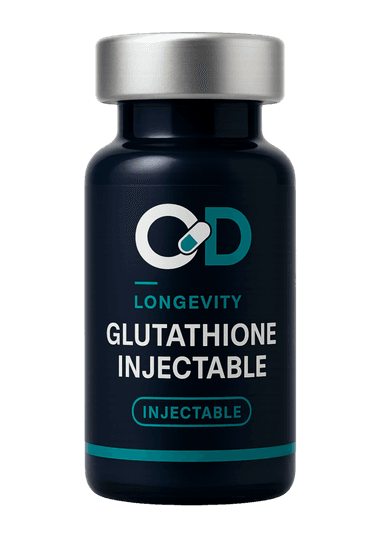
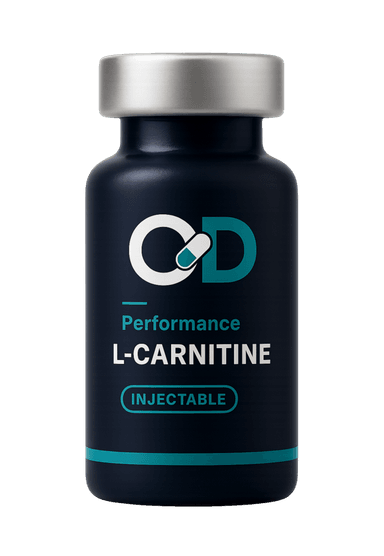
Because these factors interact, the same molecule can be absorbed at a different pace depending on where it is placed and how it is prepared. Compounded injectable preparations such as injectable NAD+, injectable glutathione, and injectable L-carnitine are examples of products formulated for a particular route; the route a given preparation uses is set by how it is compounded and by the prescription, not selected independently by the person receiving it. Matching a molecule to a route is a clinical judgment that weighs the medication's properties against an individual's health history — which is why the decision belongs to a prescriber rather than to a product page.
How it works on OpenDoseRx
On OpenDoseRx, a licensed clinician — not the shopper — makes the medical decision. You choose a product and strength, including the route a preparation uses, then complete a medical intake with your health history. An independent, licensed U.S. provider reviews that intake and decides whether a prescription is appropriate for you.
If it is, a licensed U.S. pharmacy prepares and ships it; if the provider declines, you are not charged for the medication and receive a full refund. This article is educational only and is not a substitute for a conversation with your own healthcare provider.
Common questions
- What is the difference between a subcutaneous and an intramuscular injection?
- The difference is the tissue where the medication is deposited. A subcutaneous injection places it in the fatty layer just beneath the skin, while an intramuscular injection places it one layer deeper, in the muscle. Because muscle is more richly supplied with blood than subcutaneous fat, a molecule placed in muscle is generally understood to be absorbed more rapidly than the same molecule placed in fat. The route is set by the preparation and the prescription.
- Why does the injection route affect how a medication is absorbed?
- A molecule deposited in tissue reaches the rest of the body only once the surrounding blood and lymphatic vessels pick it up, so the blood supply of the tissue matters. Muscle is densely vascularized and tends to absorb a deposit more quickly, while the sparser subcutaneous fat tends to absorb it more slowly and steadily. The molecule's own size and solubility and the formulation — for instance a water-based versus an oil-based preparation — also shape the pace, which is why route and formulation are decided together by a prescriber.
- Do injectable medications require a prescription?
- Yes. The injectable preparations discussed here, including compounded ones, are prescription-only in the United States and are not FDA-approved products. On OpenDoseRx you complete a medical intake, an independent licensed U.S. provider reviews it and decides whether a prescription is appropriate, and a licensed U.S. pharmacy prepares and ships the medication only if the provider approves. If the provider declines, you are not charged for the medication and receive a full refund.
Ready when you are
NAD+ Injectablefrom $87.60
- Your exact strength
- Licensed provider review
- Full refund if declined
Also relevant
Exact strengths and prices up front — a licensed provider reviews every request.
Browse treatments
Exact strengths and prices up front — reviewed by a licensed U.S. provider.
Keep reading
The guides that explain how ordering and review work.
How online prescriptions work: intake, provider review, and pharmacy
A plain-language walkthrough of the telehealth path — from choosing a strength to intake, independent provider review, and licensed U.S. pharmacy fulfillment.
Compounded vs. FDA-approved medications: what's the difference?
A plain-language look at what "FDA-approved" and "compounded" actually mean, why both exist, and how each is regulated.
What a medical intake covers and why it matters
A plain-language look at the categories of information a telehealth intake collects and how each one gives a reviewing provider the context to make a clinical decision.
This guide is for general education and is not medical advice. Compounded medications are not FDA-approved drugs, and statements on this site have not been evaluated by the FDA. A licensed provider reviews every prescription request.