Guide
Sympathetic vs. parasympathetic: how the body's arousal and calming branches work
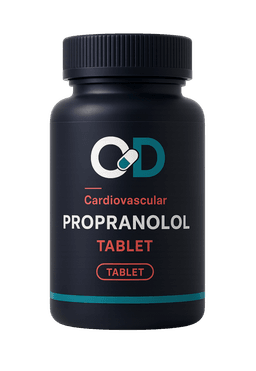 Discussed in this guidePropranololfrom $44.95
A neutral, mechanism-focused look at how the body's two autonomic branches — sympathetic arousal and parasympathetic calming — signal, differ, and keep each other in balance.
On this page
- What the autonomic nervous system is
- The sympathetic branch: mobilizing for arousal
- The parasympathetic branch: conserving and restoring
- How the two branches balance each other
- Signaling chemicals, receptors, and where medications act
- Educational scope and how prescription review works on OpenDoseRx
- Common questions
What the autonomic nervous system is
The autonomic nervous system is the part of the nervous system that regulates processes the body carries out largely without conscious effort: heart rate, blood pressure, breathing, digestion, pupil size, body temperature, and more. It is generally described as running quietly in the background, adjusting these functions moment to moment so that the body can meet whatever a situation demands. This guide is educational and describes how the system is understood to work at the level of nerves and signaling chemicals; it is not medical advice and does not describe what any individual should do.
Anatomists usually divide the autonomic nervous system into two main branches, the sympathetic and the parasympathetic, with a third division, the enteric nervous system, governing the gut. The sympathetic branch is often summarized as the fight-or-flight system and the parasympathetic branch as the rest-and-digest system. These nicknames are useful shorthand, but the reality is less like two switches and more like two forces that are almost always both active to some degree, pulling in different directions.
Most internal organs receive input from both branches, an arrangement described as dual innervation. Because the two branches typically influence the same organ in opposing ways, the body's resting state reflects a running balance between them rather than the dominance of one alone. Physiologists call the baseline level of this ongoing activity autonomic tone, and much of what the system does is a matter of shifting that balance up or down as circumstances change.
The sympathetic branch: mobilizing for arousal
The sympathetic branch is the one described as preparing the body for exertion, stress, or a sudden demand. Its nerve cells originate in the middle region of the spinal cord, an arrangement often called thoracolumbar because the fibers emerge from the thoracic and upper lumbar segments. From there, short nerve fibers travel a short distance to relay stations called ganglia, many of which sit in a chain running alongside the spine, before longer fibers continue out to organs throughout the body. This layout is understood to let a sympathetic signal spread widely and relatively quickly.
At the organs themselves, most sympathetic nerve endings release a signaling chemical called norepinephrine, also known as noradrenaline. Norepinephrine acts on a family of proteins called adrenergic receptors, which come in several subtypes, including the alpha and beta receptors found on the heart, blood vessels, airways, and other tissues. The sympathetic branch also reaches the adrenal glands, which sit atop the kidneys; when stimulated, the inner part of the adrenal gland is understood to release epinephrine, or adrenaline, into the bloodstream, so that a version of the same signal circulates as a hormone in addition to being delivered nerve by nerve.
The bodily changes associated with sympathetic activation are the familiar features of arousal. Research describes:
- An increase in heart rate and the force of each heartbeat
- Widening of the airways
- Dilation of the pupils
- Redirection of blood toward large muscles
- Release of stored glucose for fuel
- A general damping of digestion
Framed mechanistically, this is a coordinated shift of resources toward activity, driven by adrenergic signaling. It is a description of how the branch is understood to act, not a claim about how any particular person will feel in a given moment.
The parasympathetic branch: conserving and restoring
The parasympathetic branch is the counterpart described as supporting the body during calm, recovery, and routine maintenance. Its fibers originate at the two ends of the central nervous system rather than the middle, an arrangement called craniosacral: some travel with cranial nerves emerging from the brainstem, and others emerge from the sacral segments low in the spinal cord. A single nerve, the vagus nerve, carries a large share of these fibers to organs in the chest and abdomen, which is why parasympathetic activity is often discussed in terms of vagal tone.
Unlike the sympathetic branch, the parasympathetic branch relays close to or within the organ it serves, so its long fibers run most of the way before a short final connection reaches the target. Its nerve endings release acetylcholine, a signaling chemical that acts on receptors known as muscarinic receptors on the heart, digestive tract, glands, and other tissues. Acetylcholine is also the chemical used at the relay ganglia of both branches, where it acts on a different set of receptors called nicotinic receptors, so it plays more than one role across the autonomic system.
The changes associated with parasympathetic activity are broadly the mirror image of sympathetic ones. Research describes:
- A slowing of heart rate
- Stimulation of digestive movement and secretions
- Increased salivation
- Constriction of the pupils
- A general shift toward storing and replenishing energy
Because parasympathetic signaling tends to be delivered to discrete targets rather than broadcast widely, its effects are often described as more localized than the diffuse, longer-lasting arousal produced by the sympathetic branch and circulating adrenaline.
How the two branches balance each other
Because most organs receive input from both branches, and because those inputs usually push in opposite directions, the state of an organ at any moment reflects the net of the two. The resting heart rate is a common example: the heart's own pacemaker would fire faster on its own, and the steady braking influence of parasympathetic, vagal activity is understood to hold the resting rate down. A rise in heart rate can therefore reflect either an increase in sympathetic drive, a withdrawal of parasympathetic braking, or both at once. This push-and-pull, rather than a simple on-or-off, is the essence of autonomic balance.
That balance is coordinated by higher control centers. Regions of the brainstem continuously integrate incoming information and adjust the two branches through reflexes, one well-studied example being the baroreflex, a moment-to-moment loop that senses blood pressure and nudges heart rate and vessel tone to keep it stable. The hypothalamus and parts of the emotional and thinking centers of the brain feed into these circuits as well, which is one way physiologists describe how situations, thoughts, and stress can register in the body's involuntary functions.
One measure often discussed in this context is heart rate variability, the small beat-to-beat differences in the timing of the heartbeat. Researchers study heart rate variability as a window onto the interplay of the two branches at the heart's pacemaker, since the parasympathetic influence in particular is understood to leave a signature in these fluctuations. It is described in the scientific literature as a marker of autonomic activity and balance, and it is presented here only as an example of how the balance is studied, not as a diagnostic tool or a target for any individual to manage on their own.
Signaling chemicals, receptors, and where medications act
Much of what distinguishes the two branches comes down to their chemistry. The sympathetic branch mainly uses norepinephrine acting on adrenergic receptors, while the parasympathetic branch mainly uses acetylcholine acting on muscarinic receptors, with acetylcholine and nicotinic receptors shared at the relay ganglia of both. Because a given receptor subtype tends to cluster in particular tissues — beta-adrenergic receptors densely in the heart, for instance — the same chemical signal can produce different results depending on which receptors are present where.
This receptor map is also where many prescription medications enter the picture, and it is worth describing plainly and only by mechanism. Some medications are understood to act by occupying a specific receptor and blocking the branch's own chemical from activating it, and others by influencing how much of a signaling chemical is available. Beta blockers, for example, are generally described as binding beta-adrenergic receptors within the sympathetic pathway so that circulating adrenaline and noradrenaline have fewer receptors to act on. That is a description of how such a class is understood to interact with the system, not a statement that any medication is appropriate for a given person or that it will produce any particular result.
This article does not provide dosing, schedules, or recommendations of any kind, and it does not suggest that anyone should try to shift their own autonomic balance with a medication. Whether any product has a role for a particular person, and every detail of how it would be used, is a clinical judgment that belongs to an independent licensed provider who has reviewed that person's medical information. The purpose here is only to explain how the pathways and receptors are understood to work.
Educational scope and how prescription review works on OpenDoseRx
This guide is educational and describes physiology and pharmacology at the level of nerves, signaling chemicals, and receptors. It is not medical advice, it does not diagnose anything, and it is not a substitute for a conversation with your own healthcare provider or for an in-person evaluation. Nothing here should be read as a promise of any particular outcome; it is a description of how the autonomic nervous system and the medications that act on it are understood to work.
OpenDoseRx is a platform for requesting prescription products through a structured review process; it does not itself practice medicine. The steps are the same across the catalog. You choose a product and strength and complete a medical intake, a set of questions about your health history and current situation. That intake is then reviewed by an independent licensed U.S. provider, who makes the clinical decision. If the provider determines a request is appropriate, the approved order is filled by a licensed U.S. pharmacy; if the provider declines the request, the order is refunded in full.
Where a product is a compounded preparation, it is not an FDA-approved drug, and statements about it have not been evaluated by the FDA. Any decision about whether a medication fits your situation, including any dosing, is made by the reviewing provider and not selected by you or determined by this guide. Share your full medical history and any concerns with a licensed clinician who knows your care.
Common questions
- What is the simplest way to describe the difference between the two branches?
- The sympathetic branch is generally described as the fight-or-flight system that mobilizes the body for exertion or stress, mainly using norepinephrine acting on adrenergic receptors. The parasympathetic branch is described as the rest-and-digest system that supports calm and recovery, mainly using acetylcholine acting on muscarinic receptors. Most organs receive both, so the body's state reflects a running balance between them rather than one acting alone.
- Is one branch on while the other is off?
- Usually not. Both branches are typically active at the same time to varying degrees, and physiologists describe the result as a dynamic balance, or autonomic tone, rather than an on-or-off switch. A change such as a faster heart rate can reflect more sympathetic activity, less parasympathetic braking, or both at once. This is an educational description of how the system is understood to work, not a statement about any individual.
- How do medications relate to these pathways?
- Some prescription medications are understood to act on the receptors these branches use. Beta blockers, for instance, are generally described as binding beta-adrenergic receptors within the sympathetic pathway. This guide describes only the mechanism and does not recommend any medication or provide dosing. Whether a product has a role for a particular person is a clinical judgment for an independent licensed provider who has reviewed their medical information.
- What is heart rate variability in this context?
- Heart rate variability refers to the small beat-to-beat differences in the timing of the heartbeat. Researchers study it as a marker of how the sympathetic and parasympathetic branches interact at the heart's pacemaker, with the parasympathetic influence in particular leaving a signature in these fluctuations. It is mentioned here only as an example of how autonomic balance is studied, not as a diagnostic tool or something to manage on your own.
Ready when you are
Propranololfrom $44.95
- Your exact strength
- Licensed provider review
- Full refund if declined
Also relevant
Exact strengths and prices up front — a licensed provider reviews every request.
Browse sexual health & intimacy
Exact strengths and prices up front — reviewed by a licensed U.S. provider.
Keep reading
More plain-language guides on this topic.
Sildenafil vs. tadalafil: how they compare
A neutral look at two PDE5 inhibitors — their shared mechanism, general differences in onset and duration of action, and the forms they come in.
How PT-141 (bremelanotide) works: the melanocortin pathway
A neutral, mechanism-focused look at the melanocortin system and how bremelanotide is understood to act on it, in contrast to the vascular route of PDE5 inhibitors.
How PDE5 inhibitors are understood to act in erectile physiology
An educational overview of the PDE5 inhibitor class and the nitric oxide and cGMP signaling pathway it is understood to act on.
This guide is for general education and is not medical advice. Compounded medications are not FDA-approved drugs, and statements on this site have not been evaluated by the FDA. A licensed provider reviews every prescription request.