Guide
Tamoxifen vs. raloxifene: how these SERMs differ
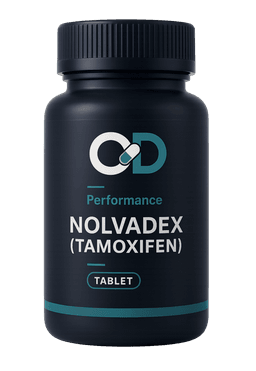 Discussed in this guideNolvadex (Tamoxifen)from $34.95
A neutral, mechanism-focused comparison of how tamoxifen and raloxifene are understood to lean agonist or antagonist at the estrogen receptor across different tissues.
On this page
Two SERMs, different tissue profiles
Tamoxifen and raloxifene are both selective estrogen receptor modulators — SERMs — meaning each is understood to bind the estrogen receptor and modulate the signal it carries rather than uniformly switching that signal on or off. The defining feature of the class is that a single molecule can be understood to behave like an estrogen activator in one tissue and like a blocker in another. This article compares the two molecules along exactly that axis: their tissue-selectivity profiles, meaning the pattern of agonist-like and antagonist-like character each is understood to show from one tissue to the next.
Because they share the SERM label, the two are often grouped together, yet their profiles are not identical. Tamoxifen is generally described as the first-generation compound from which the SERM concept emerged, and raloxifene as a later, second-generation molecule built on a different chemical backbone. Each carries its own FDA-approved labeling for defined, provider-directed uses, and both are prescription-only. What follows is a description of how these molecules are characterized in the scientific literature — not medical advice, a diagnosis, or a recommendation of either compound for any person.
The molecules behind the profiles
The reason two SERMs can differ lies partly in their chemistry. Tamoxifen belongs to a family of compounds called the triphenylethylenes, while raloxifene is a benzothiophene built around a different core and a distinct side chain. When either molecule settles into the estrogen receptor's binding pocket, its shape is understood to reposition a mobile segment of the receptor often referred to as helix 12. The literature describes the exact position helix 12 comes to rest in as governing which partner proteins the receptor can recruit — coactivators that favor transcription, or corepressors that dampen it.
Because the two molecules are shaped differently, they are understood to hold helix 12 in subtly different ways and to present a different surface to the coregulator proteins available in a given cell. The local mix of those coregulators, together with the balance of the two receptor subtypes — estrogen receptor alpha (ERα) and estrogen receptor beta (ERβ) — varies from tissue to tissue. A molecule's tissue-selectivity profile is, in effect, the sum of how its particular shape reads against each tissue's particular receptor-and-coregulator environment. This describes a molecular interaction, not a health effect.
Where the two profiles agree
Across much of their profiles, tamoxifen and raloxifene are characterized in similar terms. In breast tissue, both are generally described as acting as estrogen antagonists — occupying the receptor and favoring the corepressor-leaning conformation rather than the activating one. In bone, the pattern is generally described the other way for both molecules: each is discussed as showing estrogen-agonist character at the receptor. These shared points are part of why the two are grouped together as members of the same class.
- Breast — both are generally described as acting as estrogen antagonists at the receptor
- Bone — both are generally described as acting as estrogen agonists at the receptor
These shared characterizations describe the direction of receptor signaling each molecule is understood to favor in that tissue. They are mechanistic descriptions, not statements about what either molecule does for any individual, and they say nothing about magnitude — which is not something a description like this can establish.
Where the two profiles diverge
The clearest contrast between the two profiles is usually drawn in the uterus. In the endometrial lining, tamoxifen is generally described as showing agonist — estrogen-like — activity at the receptor, whereas raloxifene is generally described as largely antagonistic or neutral in that same tissue. This one location is the point most often cited to illustrate that two compounds sharing the SERM label can nonetheless carry meaningfully different fingerprints, because the coregulator environment of the endometrium reads their two shapes in different ways.
A second axis of comparison is sometimes drawn in the liver, where estrogen-receptor signaling is understood to influence the synthesis of certain lipoproteins and other circulating proteins; both molecules are generally described as showing some estrogen-agonist character in hepatic tissue, though the literature notes differences in degree. In each of these tissues the point being made is directional and mechanistic — which way the receptor signal is understood to lean — and not a claim about outcomes, safety, or suitability. Whether any single tissue characterization matters for a given person is a clinical judgment.
Reading a tissue-selectivity profile
A tissue-selectivity profile is best read as a map of where a molecule is understood to lean agonist and where it is understood to lean antagonist — not as a scorecard on which one compound outranks another. The two profiles differ because the molecules differ in shape and because tissues differ in their receptor-and-coregulator makeup; describing those differences is a way of understanding mechanism, not a ranking of one molecule above the other. The significance of any single tissue on that map is something only a clinician can weigh for a particular person.
Both tamoxifen and raloxifene exist as manufactured, FDA-approved oral products, and both are also prepared by compounding pharmacies for individual prescriptions. A compounded preparation of either is not an FDA-approved drug, and statements about compounded preparations have not been evaluated by the FDA. Any use outside a product's approved labeling is off-label, and this article gives no dosing guidance of any kind — questions of strength, frequency, and duration rest entirely with a prescribing provider who has evaluated the individual.
How it works on OpenDoseRx
On OpenDoseRx, a licensed clinician — not the shopper — makes the medical decision. You choose a product and strength, then complete a medical intake with your health history. An independent, licensed U.S. provider reviews that intake and decides whether a prescription is appropriate for you. If it is, a licensed U.S. pharmacy prepares and ships it; if the provider declines, you are not charged for the medication and you receive a full refund.
This article is educational only and is not a substitute for a conversation with your own healthcare provider. It describes how these molecules are understood to interact with the estrogen receptor; it does not establish a provider-patient relationship and makes no claim that either compound is suitable for any particular person.
Common questions
- What is a tissue-selectivity profile?
- It is the pattern of where a SERM is understood to act like an estrogen agonist and where it is understood to act like an antagonist across different tissues. Because a SERM's character depends on the shape it holds the receptor in — and on which coregulator proteins and receptor subtypes are present in a given tissue — one molecule can lean activating in one location and blocking in another. This describes a mechanism, not a result, and it is educational only.
- How do the tissue-selectivity profiles of tamoxifen and raloxifene differ?
- Both are generally described as estrogen antagonists in breast tissue and estrogen agonists in bone, so much of their profiles overlaps. The most commonly cited difference is in the endometrium, where tamoxifen is generally described as showing estrogen-like agonist activity and raloxifene as largely antagonistic or neutral. This is a description of a mechanistic difference between the molecules, not a statement that either one is preferable; that judgment belongs to a licensed provider.
- Do tamoxifen and raloxifene require a prescription?
- Yes. Both are prescription-only in the United States. On OpenDoseRx you choose a product and strength and complete a medical intake; an independent, licensed U.S. provider reviews that intake and decides whether a prescription is appropriate for you. If it is, a licensed U.S. pharmacy prepares and ships it; if the provider declines, you are not charged for the medication and you receive a full refund. Compounded preparations are not FDA-approved, and statements about them have not been evaluated by the FDA.
Ready when you are
Nolvadex (Tamoxifen)from $34.95
- Your exact strength
- Licensed provider review
- Full refund if declined
Also relevant
Exact strengths and prices up front — a licensed provider reviews every request.
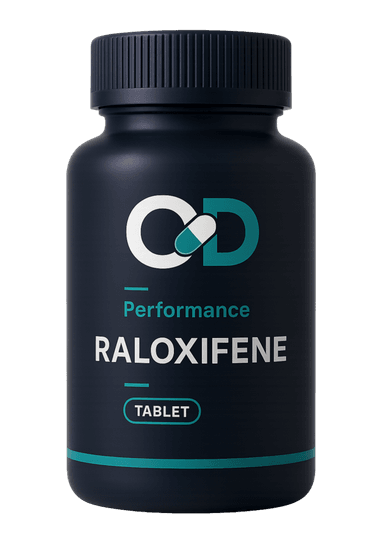
Browse performance & vitality
Exact strengths and prices up front — reviewed by a licensed U.S. provider.
Keep reading
More plain-language guides on this topic.
How testosterone works in the body: the androgen pathway
A plain-language look at testosterone as an androgen and how androgen-receptor signaling is understood to act on tissues across the body.
How enclomiphene is understood to act on the HPG axis
An educational overview of how enclomiphene is understood to interact with the hypothalamic-pituitary-gonadal axis through estrogen-receptor modulation.
How aromatase inhibitors are understood to work in estrogen management
A neutral, mechanism-focused look at the aromatase enzyme and how the medications known as aromatase inhibitors are understood to act on it.
This guide is for general education and is not medical advice. Compounded medications are not FDA-approved drugs, and statements on this site have not been evaluated by the FDA. A licensed provider reviews every prescription request.