Guide
The role of estrogen in men
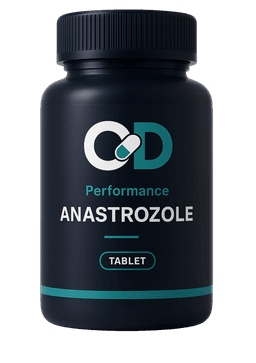 Discussed in this guideAnastrozolefrom $33.00
A neutral, mechanism-focused look at how estrogen forms in the male body through aromatization and the physiological roles estradiol is understood to play.
On this page
Estrogen is present in men, too
Estrogen is often thought of as a female hormone, but the estrogens — a family of steroid hormones whose most-discussed member is estradiol — are present in everyone, including people assigned male at birth. In an androgen-dominant physiology, comparatively little estrogen is secreted directly by a gland. Instead, most of it is generated from androgens, the family of hormones that includes testosterone, through an enzymatic conversion that takes place in tissues throughout the body.
This article is educational only — a neutral description of where estrogen comes from in men and the physiological roles estradiol is understood to have. It is not medical advice, a diagnosis, or a recommendation for any person, and it makes no claim about outcomes. Any medications mentioned are prescription-only in the United States, and a licensed provider makes every clinical decision.
How testosterone is converted into estradiol
The enzyme responsible for this conversion is aromatase, the product of the CYP19A1 gene. Aromatase catalyzes a reaction called aromatization, in which an androgen is chemically modified into an estrogen: testosterone is converted into estradiol, and the related androgen androstenedione into estrone. This is why testosterone is sometimes described not only as the principal androgen but also as a precursor that feeds the estrogen pathway.
Aromatase is expressed in a range of tissues rather than in a single organ. It is found in adipose (fat) tissue, the gonads, bone, and parts of the brain, among other sites. Because a share of the estradiol circulating in men arises from this local, tissue-based conversion, the amount of aromatase activity present — for example, in adipose tissue — is one factor understood to influence how much testosterone is aromatized into estradiol. This describes a biological relationship, not a result for any individual.
Physiological roles estradiol is understood to have in men
Estradiol acts on its own set of receptors — the estrogen receptors, principally the forms known as ER-alpha and ER-beta — which are expressed in many of the same tissues where aromatase is active. Through these receptors, estradiol is understood to participate in a number of physiological processes in the male body. These are described here as neutral physiology, not as benefits.
- Bone: estrogen receptors are present in bone tissue, and estradiol is understood to be involved in the regulation of bone turnover and, during development, in the maturation of the growth plates.
- Brain: aromatase and estrogen receptors are present in parts of the central nervous system, where estradiol signaling is understood to participate in neural processes and hormonal feedback pathways.
- Sexual function and libido: estradiol, alongside testosterone, is understood to be involved in aspects of male sexual function.
- Lipid and metabolic signaling: estrogen receptors are expressed in tissues involved in lipid handling, and estradiol is understood to participate in metabolic signaling.
Because estradiol acts through the same broad receptor system across these different tissues, it is generally described as one component of an interconnected hormonal picture rather than as a hormone acting in isolation. How any of this relates to a specific person is an individual matter for a clinician, not something a general description can determine.
Estradiol in the HPG feedback loop
Estradiol also has a role in the way the body regulates its own androgen production. The hypothalamic-pituitary-gonadal (HPG) axis is the feedback loop through which the brain and the gonads communicate: the hypothalamus releases GnRH, which prompts the pituitary to release the gonadotropins LH and FSH, which in turn act on the testes. Circulating sex hormones feed back to the hypothalamus and pituitary to influence how much of these signals is released.
Estradiol is one of the hormones understood to exert negative feedback within this loop. When the hypothalamus and pituitary sense estrogen signaling through their estrogen receptors, that signal is generally described as tending to dampen the release of GnRH and the gonadotropins. In other words, a portion of the estradiol produced by aromatizing testosterone is understood to feed back and participate in regulating the very pathway that produced the testosterone. This is a description of a self-regulating signaling loop, not a statement about any individual's hormone levels.
How it works on OpenDoseRx
On OpenDoseRx, a licensed clinician — not the shopper — makes the medical decision. You choose a product and strength, then complete a medical intake with your health history. An independent, licensed U.S. provider reviews that intake and decides whether a prescription is appropriate for you.
If it is, a licensed U.S. pharmacy prepares and ships it; if the provider declines, you are not charged for the medication and receive a full refund. This article is educational only and is not a substitute for a conversation with your own healthcare provider.
Common questions
- Why do men have estrogen at all?
- Estrogens are a family of steroid hormones present in everyone, not only in people assigned female at birth. In an androgen-dominant physiology, most estradiol is not secreted directly by a gland; it is generated from androgens such as testosterone through an enzymatic conversion called aromatization, carried out by the enzyme aromatase in tissues including fat, bone, the gonads, and the brain. This is a description of where estrogen comes from, not a claim about any result for a person.
- What is estradiol understood to do in the male body?
- Estradiol acts on the estrogen receptors, which are present in many tissues. It is understood to be involved in the regulation of bone turnover, in signaling within parts of the central nervous system, in aspects of male sexual function alongside testosterone, and in metabolic signaling. It also participates in the HPG feedback loop that helps regulate androgen production. These are neutral descriptions of physiology; how they apply to any individual is a matter for a licensed provider.
- Do medications that act on the estrogen pathway require a prescription?
- Yes. Molecules discussed in relation to this pathway, such as the aromatase inhibitor anastrozole and the SERM enclomiphene, are prescription-only in the United States. On OpenDoseRx, an independent licensed U.S. provider reviews your medical intake and a licensed U.S. pharmacy fills an order only if that provider determines it is appropriate; if the request is declined, you receive a full refund. Compounded preparations are not FDA-approved products, and this is educational information, not medical advice.
Ready when you are
Anastrozolefrom $33.00
- Your exact strength
- Licensed provider review
- Full refund if declined
Also relevant
Exact strengths and prices up front — a licensed provider reviews every request.
Browse performance & vitality
Exact strengths and prices up front — reviewed by a licensed U.S. provider.
Keep reading
More plain-language guides on this topic.
How testosterone works in the body: the androgen pathway
A plain-language look at testosterone as an androgen and how androgen-receptor signaling is understood to act on tissues across the body.
How enclomiphene is understood to act on the HPG axis
An educational overview of how enclomiphene is understood to interact with the hypothalamic-pituitary-gonadal axis through estrogen-receptor modulation.
How aromatase inhibitors are understood to work in estrogen management
A neutral, mechanism-focused look at the aromatase enzyme and how the medications known as aromatase inhibitors are understood to act on it.
This guide is for general education and is not medical advice. Compounded medications are not FDA-approved drugs, and statements on this site have not been evaluated by the FDA. A licensed provider reviews every prescription request.