Guide
What oxytocin is: the neuropeptide and what research describes
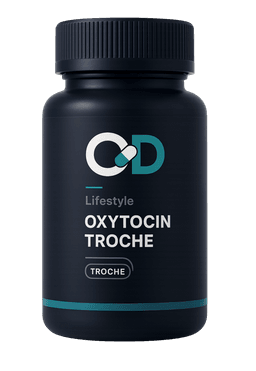 Discussed in this guideOxytocin Trochefrom $59.00
A neutral, mechanism-focused look at oxytocin as a hypothalamic neuropeptide and the physiological and social-bonding roles researchers have studied.
On this page
A neuropeptide the body makes in the brain
Oxytocin is a small peptide — a chain of nine amino acids — that the body produces in the brain. It is often described in two ways at once: as a hormone, because it is released into the bloodstream to act on distant tissues, and as a neuropeptide or neuromodulator, because it also signals within the brain itself. Both descriptions point to the same molecule; they simply describe the different routes it is understood to travel.
In everyday writing, oxytocin is sometimes called the "love hormone" or "bonding hormone," a nickname that grew out of research into its role in social behavior. Those labels are shorthand, not scientific conclusions, and much of what is written about oxytocin in popular sources runs ahead of what research has actually established. This article stays with the biology: what kind of molecule oxytocin is, where it is made, the receptor it acts on, and the physiological and social roles researchers have studied.
Oxytocin is prepared in several forms. The only FDA-approved oxytocin products in the United States are injectable and are used in obstetric care; nasal-spray and troche (a dissolvable lozenge) preparations are compounded and are not FDA-approved. This article is educational only. It describes how a molecule is understood to work and what research has examined; it is not medical advice, a recommendation, or a statement about what any individual should expect. A licensed provider makes every clinical decision.
Where oxytocin is produced and released
Oxytocin is synthesized in the hypothalamus, a region deep in the brain that helps coordinate many of the body's automatic systems. More specifically, it is made by specialized nerve cells — magnocellular neurons — clustered in two hypothalamic areas called the paraventricular nucleus and the supraoptic nucleus. These neurons manufacture oxytocin and package it for later release.
From those cells, long projections extend down to the posterior pituitary gland (also called the neurohypophysis), which sits just beneath the hypothalamus. Oxytocin travels along these projections and is stored there until nerve signals trigger its release into the bloodstream. Once in circulation, it can reach tissues elsewhere in the body — the classic examples being its action on the uterus and the mammary glands, described further below.
Oxytocin is also released within the brain itself, not only into the blood. Research describes release from the dendrites of these same neurons, and separate populations of hypothalamic neurons project to other brain regions — areas involved in emotion, social processing, and the stress response, among others. This is the basis for describing oxytocin as acting on two fronts at once: as a circulating hormone in the periphery and as a signaling molecule within central neural circuits.
The oxytocin receptor and how signaling is understood to work
Oxytocin is understood to exert its effects by binding to the oxytocin receptor, often abbreviated OXTR. It is a G-protein-coupled receptor — a common receptor type that sits in the cell membrane and relays a signal from outside the cell to its interior. When oxytocin binds, the receptor is understood to activate an intracellular pathway, working through a G-protein and the enzyme phospholipase C, that changes the cell's activity. The receptor is found in a range of tissues, including the uterus, the mammary glands, and various regions of the brain, which helps explain the breadth of processes oxytocin is studied in.
Oxytocin is closely related to another hypothalamic peptide, vasopressin (also known as antidiuretic hormone). The two are both cyclic nonapeptides — nine-amino-acid rings — and they differ by only two of those nine amino acids, and both are released through the posterior pituitary. Despite that structural similarity, they are understood to carry out distinct biological roles, and their receptors, while related, are not identical. Because the molecules resemble each other, each can interact to some degree with the other's receptors — a detail researchers weigh when interpreting studies.
The presence of oxytocin receptors in a tissue is what makes that tissue responsive to the peptide. Mapping where those receptors are expressed, and how densely, is an active part of oxytocin research, because it points to where the signal can act. This is a description of a signaling system, not a claim about any effect in a particular person. Whether oxytocin signaling is relevant to a given situation is a scientific and clinical question rather than something a general article can settle.
Physiological roles described in research
The longest-studied roles of oxytocin are in reproduction. It is understood to stimulate contraction of the smooth muscle of the uterus, and to trigger the "let-down," or milk-ejection, reflex, in which milk is moved through the mammary glands during breastfeeding. These peripheral actions — on the uterus and the breast — were the first oxytocin functions to be characterized and remain the best established in the scientific literature.
These reproductive roles are also the basis for oxytocin's FDA-approved medical use. Injectable oxytocin is an approved product used by clinicians in labor-and-delivery settings — for example, to induce or support labor and to help manage bleeding after childbirth. That approved use is specific to injectable formulations administered under medical supervision, and it is distinct from the compounded nasal-spray and troche preparations that come up in the context of other research.
Beyond reproduction, oxytocin and its receptor have been studied in connection with a wider set of physiological systems — including appetite and energy balance, stress signaling, and cardiovascular function — largely in laboratory and early-stage human research. These are areas of ongoing investigation rather than settled conclusions. Noting that oxytocin has been studied in a given system is not the same as saying it produces a particular effect, and this article makes no such claim.
History, forms, and regulatory status
Oxytocin holds a notable place in the history of biochemistry. Its uterine-contracting activity was recognized in the early 1900s, but the landmark came in the 1950s, when the American biochemist Vincent du Vigneaud determined oxytocin's nine-amino-acid sequence and synthesized it in the laboratory — making it the first polypeptide hormone to be chemically synthesized. That work earned him the Nobel Prize in Chemistry in 1955 and helped establish the field of peptide chemistry.
Regulatory status is worth stating plainly. In the United States, the FDA-approved oxytocin products are injectable and are used in obstetric care under medical supervision. An intranasal oxytocin spray was previously marketed in the U.S. to assist milk let-down but was withdrawn from the market decades ago, and today intranasal oxytocin is not FDA-approved for any indication. Compounded oxytocin preparations — such as nasal sprays and troches — are prepared by a licensed pharmacy to fill an individual prescription and are not themselves FDA-approved, a neutral statement about the compounding pathway rather than a judgment about quality.
Because oxytocin is prescription-only and its appropriateness depends on a person's health history and goals, evaluation by a licensed provider is central to the process. On OpenDoseRx, you complete a medical intake that is routed to an independent, licensed U.S. provider who reviews it; if the provider determines a prescription is appropriate, a licensed U.S. pharmacy prepares and ships it, and if the request is declined you receive a full refund. Nothing here is a substitute for that clinical review or for a conversation with your own healthcare provider.
Common questions
- What kind of molecule is oxytocin?
- It is a neuropeptide — a chain of nine amino acids, or nonapeptide — made in the hypothalamus. It is described both as a hormone, because it is released into the bloodstream, and as a neuromodulator, because it also signals within the brain. It is understood to act by binding the oxytocin receptor, a G-protein-coupled receptor.
- Where is oxytocin made in the body?
- It is synthesized by specialized neurons in two areas of the hypothalamus — the paraventricular and supraoptic nuclei — and released into the bloodstream from the posterior pituitary gland. It is also released within the brain itself, which is why it is described as acting both peripherally and centrally.
- Is oxytocin the same as vasopressin?
- No, but they are closely related. Both are cyclic nine-amino-acid peptides released through the posterior pituitary, and they differ by only two amino acids. Despite that similarity, they are understood to have distinct biological roles and to act mainly through their own receptors.
- What does research say about oxytocin and social bonding?
- Researchers have studied oxytocin in social behaviors — pair bonding in animals such as prairie voles, and trust, emotion recognition, and social approach in human studies using intranasal oxytocin. The findings are mixed and context-dependent, and reviews caution that oxytocin is not a universal "pro-social" switch. It remains an active, unsettled area of science, and this article makes no claim about any effect in an individual.
- Is oxytocin nasal spray or a troche FDA-approved?
- No. The FDA-approved oxytocin products are injectable and used in obstetric care. Intranasal oxytocin is not FDA-approved for any indication, and compounded nasal-spray and troche preparations are not themselves FDA-approved — they are prepared by a licensed pharmacy to fill an individual prescription. Either way, oxytocin is prescription-only, and a licensed provider decides whether it is appropriate.
Ready when you are
Oxytocin Trochefrom $59.00
- Your exact strength
- Licensed provider review
- Full refund if declined
Also relevant
Exact strengths and prices up front — a licensed provider reviews every request.
Browse sexual health & intimacy
Exact strengths and prices up front — reviewed by a licensed U.S. provider.
Keep reading
More plain-language guides on this topic.
Sildenafil vs. tadalafil: how they compare
A neutral look at two PDE5 inhibitors — their shared mechanism, general differences in onset and duration of action, and the forms they come in.
How PT-141 (bremelanotide) works: the melanocortin pathway
A neutral, mechanism-focused look at the melanocortin system and how bremelanotide is understood to act on it, in contrast to the vascular route of PDE5 inhibitors.
How PDE5 inhibitors are understood to act in erectile physiology
An educational overview of the PDE5 inhibitor class and the nitric oxide and cGMP signaling pathway it is understood to act on.
This guide is for general education and is not medical advice. Compounded medications are not FDA-approved drugs, and statements on this site have not been evaluated by the FDA. A licensed provider reviews every prescription request.