Guide
How GLP-1 medications interact with appetite and digestion
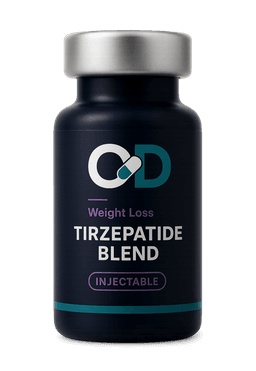 Discussed in this guideTirzepatide Blendfrom $138.29
A neutral, mechanism-focused look at how GLP-1 receptor agonism engages the gut-brain satiety axis and the gastric-emptying signals tied to hunger and fullness.
On this page
GLP-1 and the gut-brain satiety axis
Glucagon-like peptide-1 (GLP-1) is a hormone the small intestine releases in response to food. It belongs to a group of gut hormones called incretins, which the body uses to coordinate its response to eating. Part of that coordination involves ongoing communication between the digestive tract and the brain — a network often described as the gut-brain axis.
Within that network, GLP-1 is one of several signals involved in satiety, the sense of having eaten enough. Cells in the intestine secrete GLP-1 as nutrients arrive, and the hormone interacts with receptors in multiple tissues, including areas of the nervous system that process appetite. In this way, GLP-1 is part of how the body registers the presence of food and relays that information toward the centers that influence hunger and fullness.
The natural hormone is short-lived. Once released, GLP-1 is broken down within minutes by an enzyme called dipeptidyl peptidase-4 (DPP-4), so its signaling comes in brief pulses tied to eating. Understanding this baseline biology — a food-triggered gut hormone that talks to the brain and is cleared quickly — sets up how GLP-1 receptor agonist medications are designed to engage the same pathway. This article is educational only and is not medical advice.
How GLP-1 receptor agonists engage the pathway
A GLP-1 receptor agonist is a prescription molecule built to act on the GLP-1 receptor, the same receptor the natural hormone binds. "Agonist" means it engages and activates that receptor rather than blocking it. Structurally, these medications resemble the incretin hormone closely enough to fit the receptor, while being modified so that DPP-4 does not break them down as rapidly as it clears the natural peptide.
That resistance to rapid breakdown is central to how the class is understood. Because the molecule persists longer than native GLP-1, it can engage the receptor over an extended window rather than the brief pulse that follows a meal. The receptor itself is distributed across several tissues — the pancreas, the gastrointestinal tract, and regions of the brain among them — so activating it intersects with more than one part of the body's response to food.
It is worth separating mechanism from outcome. Describing how a molecule engages a receptor explains what a medication is designed to do at a biological level; it does not describe what will happen for any particular person. Individual response varies, and whether a GLP-1 receptor agonist is appropriate for someone is a clinical judgment made by a licensed provider, not something determined by how the mechanism reads on a page.
Gastric emptying and signals of fullness
One well-described element of GLP-1 signaling involves the stomach. GLP-1 receptor activity is associated with slowing gastric emptying — the rate at which the stomach passes its contents into the small intestine. When the stomach empties more gradually, food remains present in it for a longer period after eating.
This connects to appetite because the stomach communicates with the brain in part through stretch and fullness signals. As the stomach holds contents longer, the mechanical and hormonal cues that accompany a full stomach are sustained, which contributes to the sensation of satiety during and after a meal. In mechanistic terms, gastric-emptying signaling is one of the channels through which GLP-1 activity intersects with how full a person feels.
Because this action takes place in the digestive tract, it is also where the class's mechanism most directly touches digestion. The pace of gastric emptying is a normal physiological variable, and GLP-1 receptor activity is one of many inputs that can influence it. How this plays out for an individual, and whether the medication is suitable given their history, is again a matter for the reviewing clinician rather than for a general article.
Satiety signaling in the brain
Beyond the stomach, GLP-1 receptors are present in regions of the brain involved in appetite regulation, including parts of the hypothalamus and the brainstem, such as an area called the area postrema. These regions participate in integrating signals about the body's energy and nutrient status and in shaping the perception of hunger and fullness.
GLP-1 signaling reaches these centers through more than one route. Some of the communication is thought to travel along the vagus nerve, a major conduit between the gut and the brain, while GLP-1 receptor activity within accessible brain regions is also part of the picture. Together, the peripheral and central components are why GLP-1 is described as acting on a gut-brain axis rather than at a single site.
The picture that emerges is one of layered signaling: a gut hormone whose receptor sits both in the digestive tract and in appetite-related brain regions, so that engaging it involves several parts of the body's satiety system at once. Researchers continue to study how these components interact. Educational descriptions like this one summarize mechanism as it is currently understood; they do not predict any individual's experience.
Why digestive effects are part of the discussion
Because the mechanism of GLP-1 receptor agonists runs directly through the digestive system — slowed gastric emptying, receptors along the gastrointestinal tract — conversations about these medications frequently touch on digestion. The same pathway involved in satiety signaling is anchored in the gut, so the two topics are closely linked when describing how the class acts.
This is one reason GLP-1 receptor agonists are prescription-only and evaluated by a licensed provider. A clinician weighs a person's medical history, current medications, and gastrointestinal and other health factors when deciding whether a given medication is appropriate. The medical intake is designed to surface that information, and nothing in an educational article can account for an individual's full picture the way a provider's review can.
It is also why this guide stays at the level of mechanism. Describing how GLP-1 engages the satiety axis and gastric-emptying signaling explains the biology; it does not tell any reader what to expect, how much to use, or whether a medication will suit them. Those questions belong to the independent provider who reviews an intake, and this content is not a substitute for that conversation.
How prescription review works on OpenDoseRx
On OpenDoseRx, the clinical decision rests with a licensed provider rather than with the shopper. You begin by choosing a product and strength, then complete a medical intake that gathers your health history, current medications, and other relevant information.
That intake is routed to an independent, licensed U.S. provider who reviews it and decides whether a prescription is appropriate for you. If the provider determines it is, the prescription is sent to a licensed U.S. pharmacy that prepares and ships it. If the request is declined, you are not charged for the medication and receive a full refund. Every product is prescription-only and is dispensed only after this independent review, and nothing here replaces the guidance of your own healthcare provider.
Common questions
- What is the gut-brain satiety axis?
- It is the network of signals between the digestive tract and the brain that helps the body register food and coordinate the sense of hunger and fullness. GLP-1, a gut hormone released after eating, is one of the signals involved in that communication.
- How do GLP-1 receptor agonists relate to appetite signaling?
- They are prescription molecules built to activate the GLP-1 receptor, the same receptor the natural gut hormone uses. Because that receptor sits in both the digestive tract and appetite-related brain regions, engaging it intersects with multiple parts of the body's satiety system.
- Why are GLP-1 medications associated with digestion?
- Their mechanism runs through the gut — including a slowing of gastric emptying, the rate at which the stomach passes contents onward — so the same pathway involved in satiety signaling is anchored in the digestive system. Describing that mechanism is not a statement of what any person will experience.
- Do GLP-1 medications require a prescription?
- Yes. They are prescription-only in the United States. On OpenDoseRx, an independent licensed U.S. provider reviews your medical intake, and a licensed U.S. pharmacy fulfills the order only if the provider determines a prescription is appropriate. If the request is declined, you receive a full refund.
Ready when you are
Tirzepatide Blendfrom $138.29
- Your exact strength
- Licensed provider review
- Full refund if declined
Browse weight loss & glp-1 therapy
Exact strengths and prices up front — reviewed by a licensed U.S. provider.
Keep reading
More plain-language guides on this topic.
Semaglutide vs. tirzepatide: how GLP-1 and GIP/GLP-1 medications differ
A neutral, mechanism-focused comparison of two prescription incretin medications and the gut-hormone receptors they act on.
Oral vs. injectable GLP-1 medications: how the routes differ
A neutral, mechanism-focused look at how injecting a GLP-1 peptide under the skin and absorbing one by mouth differ in absorption and bioavailability.
How ondansetron (Zofran) is understood to work: the 5-HT3 pathway
A plain-language look at how ondansetron, an antiemetic often discussed alongside GLP-1 tolerability, is understood to act on the serotonin 5-HT3 pathway in the gut and brainstem.
This guide is for general education and is not medical advice. Compounded medications are not FDA-approved drugs, and statements on this site have not been evaluated by the FDA. A licensed provider reviews every prescription request.