Guide
How the skin barrier works: the stratum corneum and its lipids
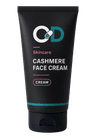
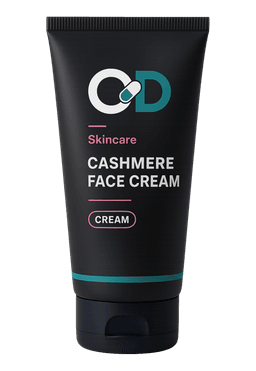 Discussed in this guideCashmere Face Creamfrom $199.00
A plain-language look at the biology of the skin's outer layer — how flattened corneocytes and a ceramide-rich lipid matrix are understood to seal in water and hold irritants out.
On this page
- What the skin barrier is — and where the stratum corneum sits
- Bricks and mortar: corneocytes and the lipid matrix
- The lipid matrix: ceramides, cholesterol, and fatty acids
- How the barrier is understood to limit water loss
- How the barrier is understood to keep irritants out
- Where products meet the barrier — and where clinical judgment comes in
- Common questions
What the skin barrier is — and where the stratum corneum sits
"Skin barrier" is a general term for the skin's role as a boundary between the body and the outside world. Most of that boundary function is concentrated in the epidermis, the thin outer sheet of skin, and specifically in its topmost layer: the stratum corneum. Only a fraction of a millimeter thick, this layer is what a splash of water, a gust of dry air, or a dab of cream first meets. It is often described as the skin's outermost line of defense.
The epidermis is built in layers. New skin cells, called keratinocytes, are generated at its base and migrate upward over time, changing as they go. By the time they reach the surface they have flattened, lost their nuclei, and filled with a tough protein called keratin — becoming the dead, disc-shaped cells known as corneocytes that make up the stratum corneum. This upward journey and the eventual shedding of surface cells, called desquamation, is the ordinary renewal cycle underneath the barrier.
This article is educational and describes how the skin barrier is understood to work at the level of structure and biology. It is not medical advice, does not diagnose or address any skin condition, and is not a recommendation of any product. Whether a particular skin concern warrants care, and what that care should be, is a decision for a licensed provider who can evaluate an individual.
Bricks and mortar: corneocytes and the lipid matrix
The most common way researchers describe the stratum corneum is as a "brick and mortar" wall. In that analogy the corneocytes are the bricks — flat, keratin-packed cells stacked in overlapping layers — and a specialized mixture of lipids (fats) fills the spaces between them like mortar. Neither element alone makes the barrier; it is the organized combination of tough cells embedded in a continuous lipid matrix that is understood to give the layer its sealing properties.
Each corneocyte is more than a dead husk. Its outer shell, called the cornified envelope, is a durable protein casing cross-linked into place, and the cells are tethered to their neighbors by protein rivets called corneodesmosomes. As cells near the surface, enzymes gradually dissolve those rivets so the outermost corneocytes can be shed in a controlled way. The balance between cells being held together and cells being released is part of how the barrier stays intact rather than either flaking apart or building up.
Critically, the pathway a water molecule or a small chemical would take through this layer runs mostly around the corneocytes, threading through the lipid "mortar" between them rather than straight through the cells. That is why the lipid matrix — its composition and how it is arranged — is central to any discussion of how the barrier limits what passes in either direction.
The lipid matrix: ceramides, cholesterol, and fatty acids
The mortar between corneocytes is not an ordinary oil. It is a highly organized blend dominated by three families of lipids: ceramides, cholesterol, and free fatty acids, present together in roughly balanced proportions. Ceramides make up the largest share and come in many distinct subtypes. This particular trio, in this arrangement, is what the scientific literature associates with a well-functioning stratum corneum.
These lipids do not sit as a random pool of grease. They are stacked into ordered sheets called lamellae — layered structures in which the lipids arrange themselves into repeating bilayers that fill the space between cells continuously. This tight, crystalline-like packing is understood to be what makes the layer an effective seal, far more so than the same lipids would be if loosely mixed. The order of the arrangement, not just the presence of the ingredients, is the point.
The lipids are delivered into place by tiny packages called lamellar bodies, which form inside keratinocytes lower in the epidermis and release their contents as the cells transition into corneocytes. Enzymes then process those precursors into the final ceramides and fatty acids of the mature matrix. Because of this assembly line, the barrier is continually being built from below even as its surface is shed — a dynamic structure rather than a static coating.
How the barrier is understood to limit water loss
The body holds far more water than the dry air around it, so water constantly tends to move outward from the moist living tissue toward the surface and evaporate. The rate at which water escapes across the skin in this way has a name in dermatology research: transepidermal water loss, or TEWL. A barrier that is functioning as expected is associated with low TEWL, and a disrupted one with higher TEWL, which is why TEWL is often used as a laboratory measure of barrier integrity.
The lipid matrix is understood to be the main brake on this outward flow. Because water crosses the stratum corneum chiefly through the lipids between corneocytes, the tightly packed, water-repelling lamellar sheets slow its passage and limit how much reaches the surface to evaporate. In effect, the ceramide-rich mortar acts as the sealant that helps the skin retain its own moisture from the inside.
There is a second, complementary piece to water retention. Inside the corneocytes sits a mixture of small water-attracting molecules collectively called natural moisturizing factor, or NMF — including amino acids and their derivatives produced when a protein called filaggrin is broken down as cells mature. These humectant molecules are understood to help the outer cells hold onto water like a sponge. Together, the lipid seal between cells and the water-binding NMF within them are the two mechanisms most often cited for how the layer keeps the skin hydrated.
How the barrier is understood to keep irritants out
The same architecture that holds water in also works in the other direction, limiting what gets through from the outside. The dense wall of overlapping corneocytes and packed lipid lamellae presents a physical obstacle that most large molecules, particles, and microorganisms cannot readily cross. This is the "keep out" side of the barrier — the reason intact skin is understood to resist many environmental irritants and pathogens that land on it.
Molecular size and chemistry matter here. Dermatology often cites a rough guideline sometimes called the "500-dalton rule," the observation that compounds much larger than about 500 daltons tend not to cross intact skin by passive diffusion, while smaller, suitably fat-soluble molecules pass more readily through the lipid route. This is descriptive rather than absolute, but it captures why the barrier filters what it does — and, incidentally, why topical formulations are carefully designed vehicles rather than simple mixtures, since a molecule must be able to negotiate the lipid matrix to reach the living skin beneath.
The barrier's defenses are not only structural. The surface carries a slightly acidic film, often called the acid mantle, with a pH in the rough range of 4.5 to 5.5; this acidity is understood to support the enzymes that maintain the lipid matrix and to be less hospitable to some unwanted microbes. The skin also hosts a community of resident microorganisms — the skin microbiome — and produces its own antimicrobial peptides. These chemical and biological layers work alongside the physical brick-and-mortar wall in how the barrier is understood to hold irritants and pathogens at bay.
Where products meet the barrier — and where clinical judgment comes in
Because the stratum corneum is what any topical product first encounters, skincare formulations are frequently discussed in relation to this layer — for example, ingredients meant to sit on the surface, humectants that attract water, or lipids such as ceramides intended to supplement the matrix. Describing how the barrier is structured helps explain why formulation and delivery are considered choices: the vehicle shapes whether an ingredient stays at the surface or reaches deeper. Nothing in this article claims that any specific product restores, repairs, or improves the barrier; those are outcomes an educational overview cannot promise.
Some topical preparations available through this site are compounded — made by a licensed pharmacy for an individual patient rather than mass-manufactured. Compounded medications are not FDA-approved products, and the statements in this guide have not been evaluated by the FDA. This guide is educational and is not medical advice; it does not diagnose a compromised barrier or any skin condition, and it is not a substitute for evaluation by your own healthcare provider.
On OpenDoseRx, the process is built so that a clinician — not the shopper — makes any medical decision. You begin by choosing a product and the strength or formulation you are interested in, so the exact preparation and its price are clear up front, and you complete a medical intake covering your health history, current medications, and other relevant information. That intake is routed to an independent, licensed U.S. provider who reviews it and decides whether a prescription is appropriate for you. If it is, the prescription is sent to a licensed U.S. pharmacy to be filled and shipped; if the request is declined, you are not charged for the medication and receive a full refund. The reviewing clinician and dispensing pharmacy carry the clinical and professional responsibility.
Common questions
- What is the stratum corneum?
- The stratum corneum is the outermost layer of the epidermis — the skin's surface. It is made of flattened, keratin-filled dead cells called corneocytes embedded in a matrix of lipids, and it is the part of the skin most responsible for the barrier function that limits water loss and helps keep irritants out.
- Why are ceramides important to the skin barrier?
- Ceramides are the largest of the three main lipid families — alongside cholesterol and free fatty acids — that fill the spaces between corneocytes. Together these lipids arrange into ordered layered sheets, and that organized, water-repelling structure is understood to be the main mechanism that slows water from escaping across the skin and limits what passes in from outside.
- What does "transepidermal water loss" mean?
- Transepidermal water loss, or TEWL, is the rate at which water moves outward through the skin and evaporates from the surface. It is used in research as a measure of barrier function: a well-functioning stratum corneum is associated with low TEWL, while a disrupted barrier is associated with higher TEWL. It is a description of a physical process, not a diagnosis.
- Does this article recommend a product for a damaged skin barrier?
- No. This guide is educational and describes how the skin barrier is understood to work at the level of biology. It does not diagnose a compromised barrier, does not claim any product restores or repairs the barrier, and is not medical advice. Whether a skin concern warrants care, and what that care should be, is a decision for a licensed provider who evaluates the individual.
Ready when you are
Cashmere Face Creamfrom $199.00
- Your exact strength
- Licensed provider review
- Full refund if declined
Also relevant
Exact strengths and prices up front — a licensed provider reviews every request.
Browse skincare & dermatology
Exact strengths and prices up front — reviewed by a licensed U.S. provider.
Keep reading
More plain-language guides on this topic.
How tretinoin works: retinoids and skin cell turnover
A plain-language look at the biology of retinoids — how tretinoin engages retinoic-acid receptors and is understood to influence how the skin renews itself.
Copper peptides (GHK-Cu): the tripeptide-copper complex in skin
GHK-Cu is a tripeptide bound to a copper ion; this guide describes the complex and the skin-signaling roles attributed to it in the scientific literature.
How bimatoprost is understood to affect eyelash growth: the prostaglandin analog pathway
A plain-language look at how bimatoprost, a prostaglandin analog first used in glaucoma care, is understood to act on the eyelash growth cycle.
This guide is for general education and is not medical advice. Compounded medications are not FDA-approved drugs, and statements on this site have not been evaluated by the FDA. A licensed provider reviews every prescription request.