Guide
What is hyaluronic acid?
 Discussed in this guideCashmere Face Creamfrom $199.00
A plain-language look at hyaluronic acid as a water-binding glycosaminoglycan — how it is built, how it holds water, and its role in the dermal extracellular matrix.
On this page
What hyaluronic acid is
Hyaluronic acid, also called hyaluronan, is a molecule the body makes naturally and distributes widely — it is found in the skin, the fluid inside joints, the eye, and many other tissues. In the skin, most of it sits in the dermis, the deeper layer beneath the surface epidermis. It belongs to a family of large sugar molecules called glycosaminoglycans, and this article looks at what that means and why the molecule is so closely associated with water.
Despite the word "acid" in its name, hyaluronic acid is not an exfoliating acid in the way glycolic acid or salicylic acid are. It is a long carbohydrate chain rather than a small acid that loosens surface cells. Its defining and most-discussed property is not any peeling action but its capacity to bind and hold water, which is the thread that runs through the sections below.
This article is educational and describes how hyaluronic acid is understood to work at the level of chemistry and biology. It does not diagnose or address any skin condition, is not medical advice, and is not a recommendation of any product. Whether a particular skin concern warrants care, and what that care should be, is a decision for a licensed provider who can evaluate an individual.
A glycosaminoglycan in the dermis
Glycosaminoglycans, often shortened to GAGs, are long, unbranched chains built from repeating pairs of sugar units. Hyaluronic acid's repeating unit is a disaccharide made of two sugars — glucuronic acid and N-acetylglucosamine — linked together and repeated thousands of times into a single very large polymer. That repetition is what makes native hyaluronan one of the largest molecules in the body by size.
It is also assembled differently. Rather than being finished inside the cell and then exported, hyaluronan is synthesized at the cell membrane by enzymes called hyaluronan synthases, which extrude the growing chain directly into the surrounding extracellular space. In the dermis, fibroblasts and other resident cells produce it, and it becomes a major component of the gel-like material that surrounds the collagen and elastin fibers.
How it binds water
The water-binding behavior of hyaluronic acid comes from its chemistry. Each repeating unit carries a carboxyl group that is negatively charged at the pH of the body, so the whole chain becomes a polyanion — a molecule studded with many fixed negative charges strung along its length.
Those fixed charges attract positively charged counterions, such as sodium, from the surrounding fluid. Drawing in ions raises the local osmotic pull, and water follows that pull inward; the chain also forms hydrogen bonds directly with water molecules. Because the polymer is so large and so highly charged, it expands into a swollen, open coil that occupies a large volume and is understood to hold many times its own weight in water. This is a physical, osmotic property of the molecule rather than an active process.
This capacity is why hyaluronic acid is described as a humectant — a water-attracting substance — and it is the property most often cited when the molecule is discussed in the context of skin and connective tissue.
Its role in the extracellular matrix
The extracellular matrix is the scaffold of material that sits outside cells and holds a tissue together. It is helpful to picture it in two broad parts: fibrous proteins such as collagen and elastin, which supply tensile strength and recoil, and a hydrated gel — often called the ground substance — that fills the spaces between those fibers. Hyaluronic acid is a principal component of that gel phase in the dermis.
By holding water, hyaluronan is understood to give the matrix its hydrated, gel-like consistency and its turgor, and to contribute to the viscoelastic way the tissue resists compression and returns to shape. The same water-swollen gel creates open, hydrated space through which cells, nutrients, and signaling molecules can move. Hyaluronan also serves as a backbone that large proteoglycans such as aggrecan can attach to, and it is recognized by cell-surface receptors such as CD44, which is how cells sense and interact with it.
The matrix is not static. Hyaluronic acid is continually synthesized and broken down — enzymes called hyaluronidases fragment it — so it turns over comparatively quickly. Its size shifts during this process, and chain length itself is studied as a signal: very large, intact hyaluronan and smaller fragments are associated with different responses in the cells around them, particularly during tissue remodeling. These are mechanistic descriptions of what has been observed, not statements about what the molecule does for any individual.
Topical, injectable, and the question of size
Hyaluronic acid appears in several forms. In topical cosmetic and compounded creams it is included as a humectant intended to sit at the skin surface, where it can attract and hold water from its surroundings. Because native hyaluronan is a very large molecule, it does not readily cross the intact stratum corneum — the skin's outer barrier tends to exclude compounds much larger than a few hundred daltons — which is one reason formulators sometimes use lower-molecular-weight fragments. This is a description of formulation chemistry, not a claim about any result.
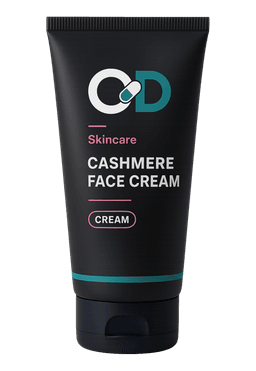
Topical moisturizers are commonly discussed in relation to humectants and surface hydration; Cashmere Face Cream is one skincare example in this category on this site, referenced here only as a neutral illustration of a topical vehicle. A cream presents its ingredients at the skin rather than delivering them deep, and the vehicle shapes where an ingredient stays. In other settings, hyaluronic acid is used in injectable dermal fillers and in eye and joint preparations, where it is often chemically cross-linked so the hydrated gel it forms is more durable. Whether any such form is appropriate for a person is a clinical judgment, not something an educational overview can decide.
How it works on OpenDoseRx
On OpenDoseRx, a licensed clinician — not the shopper — makes the medical decision. You choose a product and strength, then complete a medical intake with your health history. An independent, licensed U.S. provider reviews that intake and decides whether a prescription is appropriate for you. If it is, a licensed U.S. pharmacy prepares and ships it; if the provider declines, you are not charged for the medication and receive a full refund.
Some topical preparations offered through this site are compounded — made by a licensed pharmacy for an individual rather than mass-manufactured — and compounded products are not FDA-approved. This article is educational only and is not a substitute for a conversation with your own healthcare provider.
Common questions
- Is hyaluronic acid an acid like glycolic or salicylic acid?
- No. Despite the word "acid" in its name, hyaluronic acid is a glycosaminoglycan — a very large chain of repeating sugar units — not a small exfoliating acid like glycolic or salicylic acid. It does not loosen surface skin cells. Its defining property is that it binds and holds water, which is why it is described as a humectant.
- Does a hyaluronic acid product require a prescription?
- Many hyaluronic acid cosmetics are sold over the counter and do not require one. Prescription and compounded skincare offered through OpenDoseRx follows a review flow: you choose a product and strength and complete a medical intake, an independent licensed U.S. provider reviews it and decides whether a prescription is appropriate, and if so a licensed U.S. pharmacy prepares and ships it. If the provider declines, you are not charged for the medication and receive a full refund.
- What does molecular weight have to do with hyaluronic acid?
- Hyaluronic acid can exist as very large intact chains or as smaller fragments, and size influences how it behaves. Large native hyaluronan holds a great deal of water and does not easily cross the intact skin barrier, while lower-molecular-weight fragments are studied as signals that cells respond to differently during tissue remodeling. This is a description of the molecule's biology, not a claim about what any product does.
Ready when you are
Cashmere Face Creamfrom $199.00
- Your exact strength
- Licensed provider review
- Full refund if declined
Browse skincare & dermatology
Exact strengths and prices up front — reviewed by a licensed U.S. provider.
Keep reading
More plain-language guides on this topic.
How tretinoin works: retinoids and skin cell turnover
A plain-language look at the biology of retinoids — how tretinoin engages retinoic-acid receptors and is understood to influence how the skin renews itself.
Copper peptides (GHK-Cu): the tripeptide-copper complex in skin
GHK-Cu is a tripeptide bound to a copper ion; this guide describes the complex and the skin-signaling roles attributed to it in the scientific literature.
How bimatoprost is understood to affect eyelash growth: the prostaglandin analog pathway
A plain-language look at how bimatoprost, a prostaglandin analog first used in glaucoma care, is understood to act on the eyelash growth cycle.
This guide is for general education and is not medical advice. Compounded medications are not FDA-approved drugs, and statements on this site have not been evaluated by the FDA. A licensed provider reviews every prescription request.