
Minoxidil (Oral)
Minoxidil 0.25–5 mg Tablets
The tablet form of a well-known hair regrowth medication. Supports scalp circulation and the hair growth cycle without a topical routine.
Rx only — requires provider review
Save $6.00
Included in this price
- Provider review of your intake
- Licensed U.S. pharmacy fulfillment
- No membership or visit fees — ever
- Support from a real person
Strength
Purchase option
Supply
- A licensed U.S. provider reviews your intake before anything ships.
- No charge if a provider declines — refunded in full.
- Filled by a licensed U.S. pharmacy.
- Typically ships within 1–2 business days of approval, then 3–5 business days in transit — shipping details.
- Free shipping on orders $200+.
Minoxidil (Oral) · 2.5 mg · 30 count
$45.00$39.00
The science
About Minoxidil (Oral)
Oral minoxidil is a tablet form of the medication many people know as a topical foam or solution. It is a vasodilator, meaning it widens blood vessels, and it is thought to support hair by improving circulation to the scalp and extending the growth phase of the hair cycle.
It is typically used by people who want a tablet instead of a scalp application, or who have not gotten on well with topical routines. It works on the follicle's growth machinery rather than on hormones, so providers sometimes pair it with other approaches.
Because it affects blood pressure, oral minoxidil is prescribed and monitored under medical supervision. OpenDoseRx treatments are dispensed only after a licensed provider reviews your health intake and determines a prescription is appropriate for you.
How ordering works
From your dose to your door
- 1
Choose your strength
Pick the exact dose and pack size. You see the price before you commit — nothing is hidden until checkout.
- 2
A provider reviews your intake
Complete a short medical intake. An independent, licensed U.S. provider decides if it's appropriate — and if they decline, you're refunded in full.
- 3
Compounded and shipped
Approved orders are prepared by a licensed U.S. pharmacy — typically shipped within 1–2 business days of approval, then 3–5 business days in transit to your door.
Common questions
Your questions, answered
Pairs well with
Related treatments
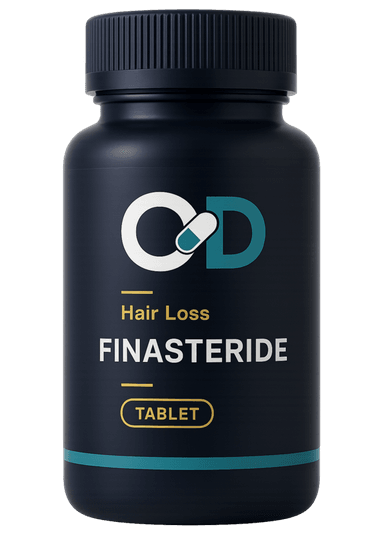
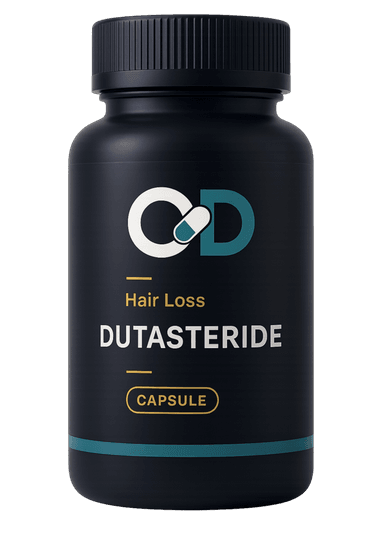
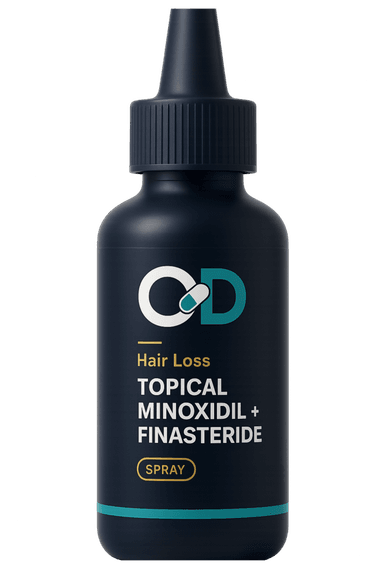
Keep learning
Related guides
How finasteride and minoxidil work for hair loss
A plain-language look at the biology of pattern hair loss and how these two prescription ingredients act on different parts of the process.
Oral vs. topical minoxidil: how the two routes differ
A neutral, mechanism-focused look at how the same minoxidil molecule behaves differently when it is applied to the scalp versus taken by mouth — where it becomes active, and how far it travels.
Telogen effluvium: how stress and illness shift hair into shedding
A plain-language, mechanism-focused look at how illness, stress, and other shocks are understood to push many follicles into rest at once, and why the shedding tends to follow months later.