
SleepBestseller
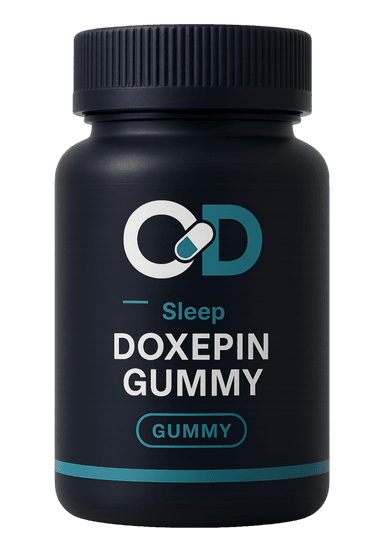
Doxepin
Doxepin 1–10 mg Capsules
Low-dose doxepin quiets the brain's wake-promoting histamine signal. A non-controlled option for people who struggle to stay asleep.
Rx only — requires provider review
Save $6.00
Included in this price
- Provider review of your intake
- Licensed U.S. pharmacy fulfillment
- No membership or visit fees — ever
- Support from a real person
Strength
Purchase option
Supply
- A licensed U.S. provider reviews your intake before anything ships.
- No charge if a provider declines — refunded in full.
- Filled by a licensed U.S. pharmacy.
- Typically ships within 1–2 business days of approval, then 3–5 business days in transit — shipping details.
- Free shipping on orders $200+.
Doxepin · 6 mg · 30 count
$43.00$37.00
The science
About Doxepin
Doxepin is a medication that, at low doses, works primarily on histamine signaling in the brain. Histamine is one of the key chemical messengers that keeps you awake, and by quieting that signal, low-dose doxepin supports the brain's natural transition into and through sleep.
It is typically used by people who fall asleep without much trouble but struggle to stay asleep through the night, or who wake earlier than they want to. It is a non-controlled option, which makes it a common starting point in provider-directed sleep care.
Doxepin is a prescription medication used under medical supervision, with your provider tailoring treatment to your sleep pattern and history. OpenDoseRx treatments are dispensed only after a licensed provider reviews your health intake and determines a prescription is appropriate for you.
How ordering works
From your dose to your door
- 1
Choose your strength
Pick the exact dose and pack size. You see the price before you commit — nothing is hidden until checkout.
- 2
A provider reviews your intake
Complete a short medical intake. An independent, licensed U.S. provider decides if it's appropriate — and if they decline, you're refunded in full.
- 3
Compounded and shipped
Approved orders are prepared by a licensed U.S. pharmacy — typically shipped within 1–2 business days of approval, then 3–5 business days in transit to your door.
Common questions
Your questions, answered
Pairs well with
Related treatments
Keep learning
Related guides
How prescription sleep medications work: the main pathways
A plain-language look at the signaling systems behind the sleep-wake cycle and how the main classes of prescription sleep medication are understood to act on them.
How trazodone and low-dose doxepin are understood to be used off-label for sleep
A neutral, mechanism-focused look at two prescription medications that originated as antidepressants and are discussed off-label in sleep contexts.
What sleep architecture is: REM, deep sleep, and the sleep cycle explained
A plain-language look at how a night of sleep is structured — the NREM stages, REM, the repeating sleep cycle, and the homeostatic and circadian drives that shape when we sleep.